• Skip to main content

Global Institute of Organizational Coaching

Global Coaching Certification

  • Explore Pathways
  • Dr Peggy’s Books
  • Resources
  • Log In
  • About

well-being at work

Building Habits for Wellbeing

March 25, 2025 by Dr. Peggy Marshall

One of the most common requests from clients and leaders is for strategies and resources to help change habits. Building habits is not just about making grand resolutions or sweeping changes; it’s about taking small, intentional steps that fit naturally into our daily routines. Yet, one of the biggest challenges is making those practices stick, especially when life gets busy and priorities compete for our attention.

That’s why building habits around well-being strategies is so important. It’s not about transforming your routine overnight but making consistent, manageable adjustments that accumulate into lasting improvements. Whether it’s taking a few mindful breaks throughout the day, fostering stronger social connections at work, or practicing gratitude regularly, these small habits can have a big impact on how we feel and perform.

In this blog, we’re diving into practical ways to build well-being habits that last. Let’s explore some habits you can develop to enhance well-being at work and make it an integral part of your everyday routine.
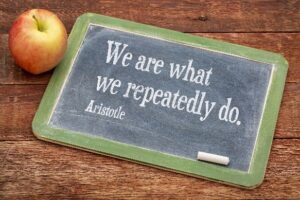
Habits for Wellbeing

  1. Habit Building Around Work-Life Balance
  • Start Small: Begin by setting a clear boundary for work hours. For example, commit to logging off at a specific time each day.
  • Attach to an Existing Routine: After finishing your workday, immediately change into comfortable clothes or go for a brief walk to signal the transition.
  • Track Progress: Use a habit tracker to log when you successfully end work on time.
  • Reinforce with a Reward: Treat yourself to something relaxing after adhering to your boundary—like watching a favorite show or cooking a nice meal.
  • Make It Enjoyable: Choose a wind-down activity you genuinely look forward to, like reading or spending time with family.
  1. Habit Building Around Creating a Supportive Environment
  • Daily Check-In Habit: Start your day by checking in with yourself and assessing your emotional state. This could be a quick journaling session or a few minutes of reflection.
  • Weekly Team Check-In: Schedule a regular 15-minute catch-up with team members to discuss how they’re feeling and what support they need.
  • Make It Routine: Link these check-ins to a specific time—like Monday mornings or Friday afternoons—so they become habitual.
  • Encourage Peer Support: Make it a habit to give positive feedback to at least one colleague per day.
  1. Habit Building Around Open Communication
  • Habit of Listening: Practice active listening by dedicating the first few minutes of every meeting to hear others’ perspectives without interrupting.
  • Daily Reflection: Spend a few minutes at the end of each day reflecting on how well you communicated and what you could improve.
  • Encourage Feedback: Make it a habit to ask for feedback at least once a week, whether it’s about your leadership style or a recent project.
  • Reinforce the Habit: Reward yourself for good communication by acknowledging your efforts and celebrating improved relationships.
  1. Habit Building Around Recognition and Reward
  • Daily Praise Habit: Set a goal to acknowledge at least one positive contribution from a team member each day.
  • End-of-Week Reflection: Review your recognition efforts and make note of how they impacted morale.
  • Gratitude Journaling: Maintain a habit of writing down three positive things you observed in your team each week.
  • Public Acknowledgment: Make it routine to publicly recognize achievements in meetings or via company communication channels.
  1. Habit Building Around Personal and Professional Growth
  • Learning Block: Dedicate 20 minutes a day to personal or professional development activities, like reading industry articles or practicing a new skill.
  • Mentorship Habit: Schedule biweekly meetings with a mentor or mentee to exchange knowledge and experiences.
  • Document Growth: Keep a journal to track what you learned and how you applied it.
  • Reflect and Adjust: Once a month, reflect on your progress and set new learning goals.
  1. Habit Building Around Physical Health
  • Movement Habit: Set a reminder to stand up and stretch every hour during the workday.
  • Morning Routine: Incorporate a 5-minute stretch or yoga practice into your morning routine.
  • Walking Meetings: Replace sedentary meetings with walking ones whenever possible.
  • Hydration Habit: Keep a water bottle at your desk and aim to refill it three times a day.
  • Track Progress: Use a fitness app to log daily steps or workout sessions.
  1. Habit Building Around Mindfulness and Mental Health
  • Mindful Morning Routine: Start each day with a 5-minute meditation or breathing exercise to set a calm, focused mindset.
  • Midday Pause: Take a short mindfulness break during lunch to check in with your thoughts and emotions.
  • Gratitude Habit: Write down one thing you’re grateful for at the end of each workday.
  • Relaxation Ritual: Develop a habit of winding down before bed with a calming activity, like light stretching or journaling.
  1. Habit Building Around Financial Well-Being
  • Weekly Budget Review: Set aside 10 minutes every Friday to check your spending and adjust your budget.
  • Automate Savings: Set up automatic transfers to your savings account after every paycheck.
  • Daily Expense Tracking: Record your daily expenses to stay aware of spending habits.
  • Reward for Meeting Goals: Treat yourself (responsibly) when you hit your monthly savings goal.
  1. Habit Building Around Social Connections
  • Check-In Habit: Make it a routine to reach out to a colleague or friend once a week just to see how they’re doing.
  • Coffee Chat Routine: Schedule regular virtual or in-person coffee breaks with team members to maintain connections.
  • Team Gratitude Circle: Incorporate a brief gratitude-sharing session during team meetings.
  • Mentoring Habit: Commit to checking in with mentees on a regular schedule to maintain supportive relationships.
  1. Habit Building Around Leadership and Well-Being
  • Model Self-Care: Practice self-care openly and encourage your team to do the same.
  • Lead with Positivity: Make it a habit to start meetings with a positive note or success story.
  • Promote Balance: Regularly communicate the importance of taking breaks and disconnecting from work after hours.
  • Reflect on Your Leadership: Set aside time each week to evaluate how your actions and decisions are influencing team well-being.

Final Thoughts

Building habits around well-being strategies requires consistency, intention, and a growth mindset. It’s not about making sweeping changes overnight, but rather about committing to small, manageable actions that build momentum over time. Start with one simple habit, practice it consistently, and be patient with yourself as you adjust and grow. Celebrate progress, even if it’s incremental, and remember that every positive step contributes to a healthier, more resilient you.

Developing habits that enhance well-being benefits not only your personal health and happiness but also the overall culture of your workplace. When individuals prioritize self-care and wellness, it creates a ripple effect that fosters a supportive, positive environment. Leaders who model and encourage these habits set the tone for a culture where well-being is not just an individual effort but a collective priority.

By embedding well-being habits into daily routines, organizations can cultivate a thriving culture that values both individual and team wellness. It’s about creating a workplace where well-being is not just an afterthought but an integral part of how we work and support one another. Let’s commit to building these habits, nurturing them consistently, and empowering ourselves and others to prioritize well-being as a way of life.

Next week, on Wednesday, April 2, at 11 am EST, Global IOC and The Global Coaching Network will be hosting an exciting Webinar that dives deep into well-being from multiple perspectives. This event will explore well-being through different lenses and offer practical strategies for strengthening and expanding well-being practices in both personal and professional contexts.

Whether you're looking to enhance your own well-being or support the well-being of those you lead, this Webinar will provide valuable insights and actionable takeaways. Join us to learn from industry experts and thought leaders who are passionate about creating resilient and thriving workplaces.

Mark your calendar and don’t miss this opportunity to gain fresh perspectives and new strategies to enhance well-being at work!

Zoom link: https://us02web.zoom.us/j/89306258336?pwd=DKiN81Y6PdmueKawvEa6NQlCaoHi14.1

 

Filed Under: Communities of Practice Tagged With: Well-being, well-being at work

Well-Being at Work: Creating a Culture of Support, Balance, and Coaching

March 11, 2025 by Dr. Peggy Marshall

Well-being at Work: Creating a Culture of Support, Balance, and Coaching

In today’s fast-paced work environment, well-being at work is no longer just a perk, it’s essential. A healthy, engaged workforce leads to higher productivity, lower turnover, and a more positive company culture. But achieving workplace well-being goes beyond offering gym memberships or mindfulness apps. It requires a holistic approach that considers physical, emotional, and psychological health, while also integrating coaching strategies that foster resilience, engagement, and long-term success.

Why Workplace Well-being Matters

Employee well-being is directly linked to performance, job satisfaction, and retention. Studies show that when employees feel mentally and physically well, they are more engaged, creative, and resilient. Conversely, burnout, stress, and a lack of support lead to absenteeism, disengagement, and high turnover rates.

According to “Wellbeing” by Tom Rath and Jim Harter, workplace well-being is a key predictor of overall life satisfaction. Their research, based on Gallup’s global studies, found that employees who experience high workplace well-being are twice as likely to thrive in their personal lives. Additionally, “The Power of Full Engagement” by Jim Loehr and Tony Schwartz highlights that workplace performance isn’t just about time management, it’s about energy management. Their research shows that employees who balance energy expenditure with renewal experience higher engagement, resilience, and job satisfaction. Organizations that integrate coaching into their well-being strategies report higher employee engagement, lower stress levels, and stronger team performance, proving that workplace well-being extends far beyond office walls.

Another author known for his work in well-being, Martin Seligman, contributes valuable insights to the connection between well-being and workplace outcomes, particularly regarding absenteeism, disengagement, and turnover. His PERMA model (Positive Emotion, Engagement, Relationships, Meaning, and Accomplishment) emphasizes that fostering psychological well-being enhances motivation, job satisfaction, and resilience, all of which directly impact an organization's retention and performance.  Seligman’s research suggests that workplaces that cultivate positive emotions and meaningful engagement experience lower absenteeism and turnover rates, as employees are more likely to feel fulfilled and committed to their roles. Additionally, a sense of accomplishment and strong workplace relationships contribute to increased job satisfaction, reducing disengagement and burnout.

When organizations integrate coaching and positive psychology principles, they help employees build resilience, maintain motivation, and develop a stronger connection to their work and colleagues.  By incorporating Seligman’s perspective, it becomes clear that workplace well-being is not just about preventing stress—it is about actively fostering a work environment that promotes thriving, purpose, and long-term commitment. Organizations that adopt this approach see not only improved engagement but also a significant reduction in absenteeism and turnover, reinforcing the idea that well-being is a powerful driver of organizational success.

The Evolution of Workplace Well-being

Workplace well-being has evolved significantly over time, expanding from a narrow focus on physical health to a comprehensive strategy that includes mental, emotional, and financial well-being.

During the Early Industrial Era (1800s – Early 1900s), working conditions were harsh, with long hours, unsafe environments, and little regard for worker well-being. The first labor movements emerged to advocate for fair wages, reasonable working hours, and safer work conditions. These efforts laid the foundation for future workplace regulations and employee protections.

In the Mid-20th Century (1950s – 1970s), the concept of workplace well-being began to take shape with the introduction of Employee Assistance Programs (EAPs). Initially, these programs focused on providing physical health support and medical benefits, helping employees access healthcare and manage occupational health risks.

By the Late 20th Century (1980s – 2000s), organizations recognized the importance of a more holistic approach to well-being. Workplace wellness programs expanded to include stress management, work-life balance initiatives, and mental health resources. Companies began offering benefits such as gym memberships, counseling services, and flexible work arrangements to improve employee satisfaction and productivity.

In the Modern Era (2010s – Present), workplace well-being has become a strategic business priority. Organizations now emphasize psychological safety, emotional intelligence, and flexible work models as essential components of a thriving workplace. Coaching has emerged as a key tool for enhancing employee well-being and leadership effectiveness, helping individuals build resilience, set healthy boundaries, and find fulfillment in their professional roles. This evolution reflects a growing understanding that employee well-being is not just a perk but a critical factor in organizational success.

The Key Dimensions of Workplace Well-being

Workplace well-being requires a comprehensive approach that enhances employee health, happiness, and performance. Coaching plays a vital role in fostering these key dimensions:

✔ Psychological Safety – Employees thrive when they feel safe to speak up without fear of embarrassment or retaliation. Leaders can build trust by actively listening, responding with empathy, and encouraging open discussions about mental health and workload challenges. Coaching-based leadership strengthens engagement and productivity.

✔ Work-Life Balance & Boundaries – Blurred work-life boundaries contribute to stress and burnout. Organizations can promote balance through flexible work arrangements, respecting after-hours boundaries, and encouraging breaks. Coaching helps employees manage workloads and set boundaries without guilt, improving overall well-being.

✔ Meaningful Work & Growth – Employees are more engaged when they find purpose in their roles. Organizations can connect tasks to the company mission, provide career development opportunities, and encourage goal setting. Coaching aligns personal strengths with professional aspirations, driving motivation and retention.

✔ Mental & Emotional Well-being – Work-related stress impacts focus and morale. Organizations should offer Employee Assistance Programs (EAPs), stress management training, and foster open conversations about mental health. Coaching builds resilience and emotional intelligence, helping employees navigate challenges effectively.

✔ Physical Well-being & Ergonomics – A healthy workforce is a productive one. Providing ergonomic workspaces, promoting movement breaks, and offering wellness programs support employee health. Coaching reinforces positive habits and encourages healthier lifestyle choices.

It is through integrating these dimensions that organizations create environments where employees feel valued and supported. Coaching empowers individuals to overcome challenges, set boundaries, and thrive in their work.

Closing Thoughts: The Future of Workplace Well-being

Workplace well-being is not a trend, it is a fundamental driver of employee engagement, resilience, and organizational success. As workplaces continue to evolve, integrating coaching, psychological safety, and holistic well-being strategies will be essential for creating environments where employees feel valued, supported, and empowered to thrive.

By fostering a culture of trust, balance, and professional growth, organizations can reduce burnout, enhance productivity, and build stronger, more engaged teams. Coaches play a crucial role in this transformation, equipping employees and leaders with the tools they need to navigate challenges, cultivate resilience, and sustain long-term success.

Now is the time to act. Whether through coaching, leadership development, or well-being initiatives, every step toward a healthier, more supportive workplace contributes to a thriving workforce and a more successful organization. Let’s work together to shape the future of workplace well-being—one conversation, one strategy, and one empowered employee at a time.

Webinar April 2

Coaches play a critical role in shaping workplace well-being, helping individuals and organizations build resilience, engagement, and sustainable performance. Our Well-being at Work webinar on April 2 will provide valuable insights and practical strategies for coaches to enhance their impact.  Join us and be part of the movement to create more engaged, resilient, and thriving workplaces through coaching!

Zoom link: https://us02web.zoom.us/j/89306258336?pwd=DKiN81Y6PdmueKawvEa6NQlCaoHi14.1


Filed Under: Communities of Practice Tagged With: Well-being, well-being at work

  • | Home |
  • Leader Development Pathways
  • | Executive Coaching |
  • Team Coaching
  • | Sustaining Impact |
  • Detach from Drama
  • | Coach Cultures at Global IOC |
  • My Account |

Copyright Global IOC© 2026