• Skip to main content

Global Institute of Organizational Coaching

Global Coaching Certification

  • Explore Pathways
  • Dr Peggy’s Books
  • Resources
  • Log In
  • About

Dr. Peggy Marshall

Think Again by Adam Grant

August 4, 2025 by Dr. Peggy Marshall

A Reflective Book Review for Leaders and Coaches
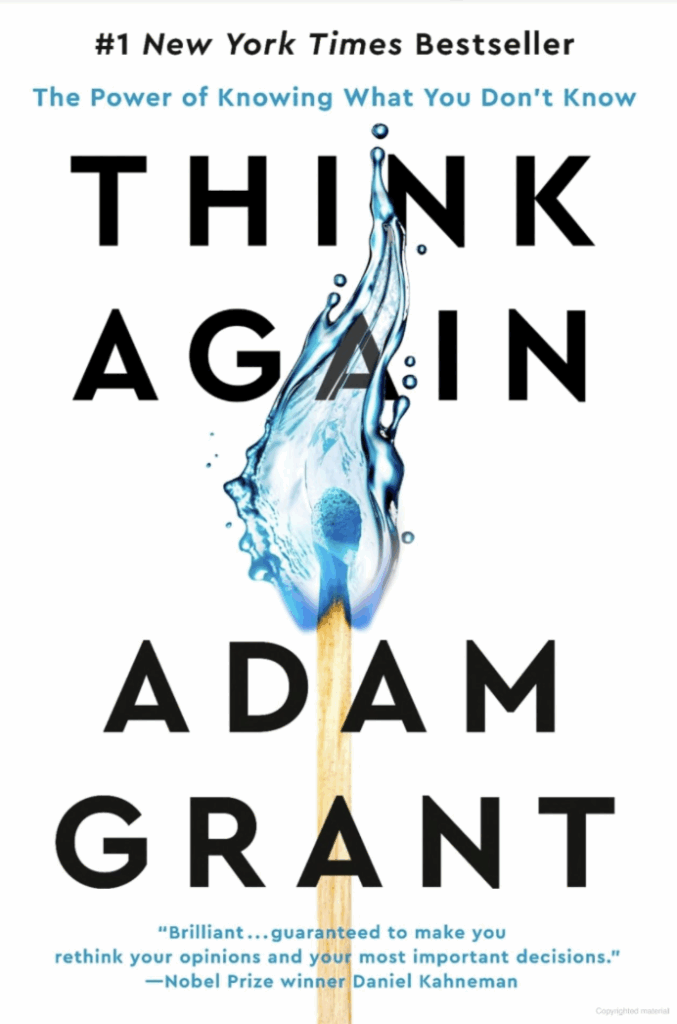
We live in a world that often rewards confidence more than curiosity, where being right can seem more valuable than being open. In Think Again, organizational psychologist Adam Grant invites us to consider a different path—one where wisdom comes not from holding tightly to our beliefs, but from the courage to question them.

At its core, Think Again is about the power—and the necessity—of rethinking. Grant makes a compelling case that our ability to revisit, revise, and sometimes even relinquish our ideas is one of the most important skills we can cultivate in a rapidly changing world. Whether we’re leading teams, parenting children, navigating conflict, or making personal decisions, the ability to pause and ask, “What if I’m wrong?” becomes a gateway to growth.

What makes this book especially timely is its relevance across domains. Grant explores rethinking on three levels: within ourselves, in our conversations with others, and in the cultures we create. Along the way, he introduces us to the mindsets that can keep us stuck—what he calls the Preacher, Prosecutor, and Politician modes of thinking. The preacher defends sacred beliefs. The prosecutor attacks opposing views. The politician seeks approval. All of them, he argues, make it harder to truly learn. The alternative? Thinking like a scientist—curious, humble, and grounded in the willingness to change one's mind in light of new evidence.

For those of us in leadership or coaching roles, this book offers not just insight but challenge. Grant reminds us that certainty is seductive, especially when we’re seen as experts or decision-makers. But confident humility—the ability to know what we know while staying open to what we don’t—may be the more powerful stance. In one of the book’s most memorable sections, he describes how effective leaders create space for dissent, invite counterviews, and model learning aloud, even in high-stakes environments.

Grant doesn’t preach from a distance. He shares stories of entrepreneurs who avoided collapse by questioning their own business models, teachers who transformed classrooms by normalizing mistakes, and individuals who used the tools of motivational interviewing to shift conversations that might otherwise have stalled in defensiveness. These examples, woven with research from behavioral science and psychology, offer a hopeful reminder: change is possible—even when it’s hard.

What stays with me most after reading Think Again is not a single framework or technique, but a feeling—a kind of quiet encouragement to lead with less armor and more openness. In a culture that often equates changing your mind with weakness, Grant argues that rethinking is a strength, a sign not of indecision but of wisdom.

For coaches, facilitators, and anyone guiding others through change, this book is more than useful—it’s resonant. It speaks to the practice of holding space for others to see what they couldn’t yet see, and to do the same for ourselves. As Grant writes, “If knowledge is power, knowing what we don’t know is wisdom.”

And perhaps, in the end, that’s the invitation: not just to think again, but to live again—more flexibly, more relationally, and more courageously.
 

Filed Under: Book Reviews Tagged With: Adam Grant, Think Again

The Future of Mastery: Why We’re Reimagining Coach Training at Global IOC

August 4, 2025 by Dr. Peggy Marshall

At Global IOC, our mission has always been clear: to develop the most effective, impactful, and masterful coaches in the world. It’s a mission that demands we not only stay current with the principles of great coaching but also with the science of great learning.

In a world that demands more flexibility, personalization, and real-world application than ever before, we believe the way we train exceptional coaches must also evolve.

So, when clients and others proposed a fundamental shift away from our traditional classroom model—a model I personally enjoy and value—I’ll admit, I was skeptical. My bias was clear: I love the energy of a live cohort. But my responsibility as a leader is to challenge my own biases and follow the evidence. The question was stark: could a more flexible, personalized model produce demonstrably better coaches?

Anyone who has worked with me knows that I am relentlessly driven by a simple question: "What does the evidence say?" I've built my career and this company on the principle that knowledge can be found and examined.  High Theoretic here….

Our current virtual training model is strong. Our live, 90-minute sessions are interactive, filled with case studies and breakout groups that have served our students well for years. By most standards, it’s a success. And personally, I love the dynamic energy of those sessions.

But my job is to challenge our own success and ask a tougher question: "Is this the most effective way for professionals to achieve true coaching mastery?" My responsibility is to follow the evidence, even if it leads away from a model I know and like.

First, we examined the power of individual reflection. The research shows that true, lasting insight often doesn’t happen in the rush of a group discussion. It happens when an individual has the time and space to quietly wrestle with a new concept on their own. We saw an opportunity to build this critical reflective space directly into our process.

Second, we analyzed how to maximize precious "live" time. Our 90-minute sessions were good, but we were using valuable synchronous time for initial knowledge transfer. The evidence showed that if students engaged with the core concepts before the group session, our live time together could be 100% dedicated to application, synthesis, and high-level feedback. It makes our time together exponentially more valuable.

Finally, this led to a new definition of group work. The goal of a breakout room isn't just to discuss an idea; it's to deepen it. When each student arrives at the LeaderCoach Lab having already done their individual reflection, the quality of the group synthesis is transformed. They aren’t just learning; they are co-creating a deeper understanding. The conclusion was inescapable: we could evolve from a good model to a truly exceptional one.

And then, a funny thing happened. My heart was won over, too. I realized that this new model allows me and my senior faculty to engage with our students in a more meaningful way than ever before. We're no longer presenters of information; we are true mentors in the practice arena, guiding, challenging, and celebrating growth up close.

That’s why we are thrilled to announce a fundamental and exciting transformation of two of our cornerstone programs: Coaching Essentials and the Registered Professional Coach (RPC) program. We are moving from a traditional cohort model to a more dynamic, integrated, and evidence-based learning system designed for deep, lasting mastery.

Introducing a Three-Part Model for Applied Mastery

Our newly redesigned programs are built on a powerful, integrated learning framework:

  1. Self-Directed Learning Modules: Access a rich library of our core curriculum—the theory, models, and Global IOC competencies—on your own schedule. Learn at your pace, when you are most receptive, and revisit complex topics as needed.
  2. Dedicated Oversight Coaching: This is far more than just mentorship. You will be paired with a Global IOC Master Coach who provides personalized guidance, discusses your coaching sessions, and helps you translate theory into practice with precision and confidence.
  3. Virtual LeaderCoach Labs: This is where the learning comes to life. Join interactive online labs with a small group of peers. These sessions are not lectures; they are dynamic practice arenas dedicated to peer coaching, receiving expert feedback, and workshopping real-world coaching challenges.

What This Looks Like in Practice

Imagine a week in the new RPC program. On Monday morning, you might dive into the self-directed module on "Connecting and PEA/NEA." On Wednesday, you'll submit a short reflection on the coaching content and get direct, written feedback from your Oversight Coach. Then on Friday, you'll join your LeaderCoach Lab to workshop that very competency with your peers, practicing in real-time and gaining new insights. Every component builds on the last, turning theory into skill.

Answering Your Questions

Q: Will I lose the sense of community I'd get from a traditional cohort? A: Not at all. We've designed the LeaderCoach Labs to be the heart of our community. Because these small-group sessions are focused entirely on active practice and feedback, you'll build deep, professional relationships with peers who are just as committed to the craft as you are. It’s a community built on shared practice, not just shared lectures.

Q: Is this new model as rigorous as the old one? A: It’s even more so. The rigor has been shifted from passive listening to active application. The combination of personalized feedback from your Oversight Coach on your actual coaching, plus the live practice in the Labs, demands a higher level of engagement and leads to a deeper, more integrated level of skill.

What This Means for You

This new model is designed to deliver a more profound and practical learning experience. For you, this means:

  • Ultimate Flexibility: Learn the core content on your schedule, from anywhere in the world.
  • Deeper Integration: Apply what you learn immediately and receive feedback, locking in the skills.
  • Unmatched Confidence: Enter the profession knowing your skills have been honed in live, rigorous practice labs and certified by a master coach.
  • A More Personal Journey: Receive the focused, one-on-one attention you need to unlock your unique potential as a coach.

Join the Conversation and Take the Next Step

At Global IOC, we are relentlessly committed to excellence. This new learning model represents the next stage of that commitment, and we invite you to be part of this exciting new chapter. The Coaching Essentials program begins September 15 with The Registered Professional Coach program starting the week of October 26.  The LeaderCoach labs for each program will be on Fridays from 11am -12 EST.

For more information contact Dr. Peggy Marshall here.

Or if you have already decided this is for you register here.

Filed Under: Corporate Coaching Blog Tagged With: coaching certifications, future of coaching, global training, online coaching courses

Book Review: Emotional Agility by Susan David

August 11, 2025 by Dr. Peggy Marshall

In today’s workplaces, technical skill alone isn’t enough. Leaders are called on to navigate ambiguity, high-pressure change, and the unpredictable human side of collaboration. In Emotional Agility, Harvard psychologist Susan David offers a research-based framework for one of the most critical—and overlooked—leadership capacities: the ability to work with emotions rather than be driven by them.

David defines emotional agility as the ability to be with your thoughts, feelings, and stories in a way that is flexible, values-driven, and constructive. In other words, it’s the skill of working with your internal experience rather than being run by it.

She identifies two traps that derail emotional agility:

  • Hooking – This happens when a thought or feeling grabs hold of you and drives behavior without reflection. You might find yourself replaying a perceived slight from a meeting, or making a decision out of frustration rather than careful consideration. Hooking often comes with urgency—the impulse to act now, defend yourself, or shut someone down—without pausing to ask if that’s really the most effective choice.
  • Fusion – Here, we merge with our thoughts and treat them as absolute truth. If you think, “They don’t respect me,” fusion makes it feel indisputable, even when it’s one interpretation among many. Fusion keeps us locked into one perspective and blinds us to nuance or alternative explanations.

David’s alternative is a process of four key practices that together create the flexibility, perspective, and values alignment leaders need.

  1. Showing Up – Rather than avoiding discomfort or trying to project “everything’s fine,” showing up means acknowledging what you feel—anger, anxiety, disappointment—and allowing it into your awareness without shame. In leadership, this builds authenticity and trust, showing others that emotions are part of the work, not a weakness to hide.
  2. Stepping Out – This is the mental shift from being inside the thought or feeling to observing it. You might notice, “I’m feeling defensive right now,” which creates distance and reduces the automatic power of the reaction. This is where reflection begins.
  3. Walking Your Why – Values become your compass here. When emotions are running high, asking “What matters most in this situation?” helps align your response with your deeper principles rather than your momentary reactions.
  4. Moving On – Emotional agility doesn’t mean waiting until the feeling passes; it’s about taking small, intentional steps that honor your values even while discomfort is present. Leaders who can “move on” demonstrate resilience and model for others that progress is possible without perfection.

For leaders, these skills are game-changing. Emotional agility allows you to respond to feedback without defensiveness, handle conflict without escalation, and remain grounded in the face of change. It’s the difference between being reactive in the moment and being responsive in service of the bigger picture.

At Global IOC, we see emotional agility as a cornerstone of coaching cultures. That’s why both our Registered Professional Coach (RPC) and Senior Registered Professional Coach (SRPC) programs include a full module dedicated to developing it. In these programs, we go beyond the theory—helping leaders apply emotional agility in real time:

  • Recognizing when they’re hooked by a narrative or reaction.
  • Practicing how to “step out” and create space between emotion and action.
  • Using values-based alignment to guide team decisions and conversations.
  • Building resilience by moving forward with small, meaningful shifts rather than waiting for the “perfect” solution.

This applied practice turns emotional agility from a personal competency into an organizational capability. When leaders model it, teams learn that emotions are not to be avoided, but understood and navigated. This creates a foundation of psychological safety, innovation, and adaptability—qualities every organization needs in today’s environment.

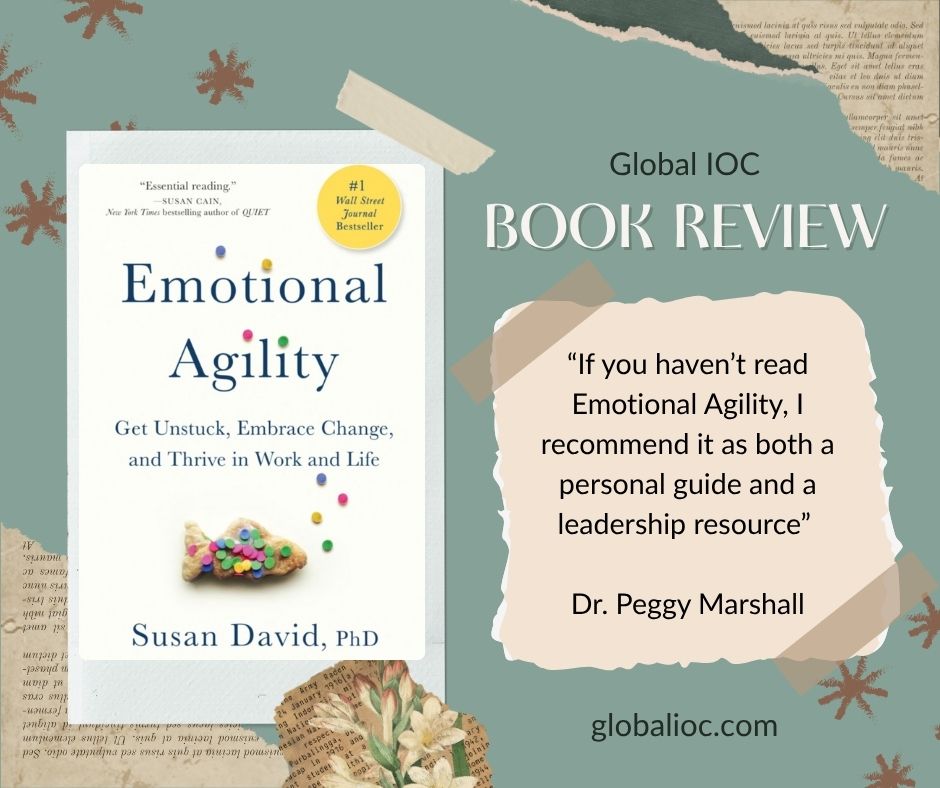
If you haven’t read Emotional Agility, I recommend it as both a personal guide and a leadership resource. And if you want to move from reading about it to living it in your leadership and coaching, our RPC and SRPC programs are the next step.


Filed Under: Book Reviews

The PAUSE Model: A Framework for Interrupting Drama and Leading with Intention

August 11, 2025 by Dr. Peggy Marshall

The drama cycle moves fast—often faster than our awareness can catch up. A comment is made, a look is misread, a thought flickers, and a story begins to form. Emotions surge, and before we realize it, we’re caught in a loop of reaction and emotional contagion that can derail trust and productivity.

But between that first trigger and the downward spiral, there is a small, pivotal moment where transformation becomes possible: the moment of pause.

The PAUSE model is a practical framework designed to help you find and claim that moment. It’s not about fixing others or following a rigid script under pressure. Instead, PAUSE is a tool for slowing your own emotional escalation, creating mental space for reflection, and making intentional, values-based choices—especially when it matters most.

Why We Need to PAUSE: Moving Upstream from Conflict

Most communication models focus on repairing conflict after it’s already happened—how to navigate a difficult conversation or deliver tough feedback. PAUSE works upstream. It’s a preventative practice that helps us notice our own emotional activation before it hardens into a limiting narrative or spills into a counterproductive action.

This isn’t about suppressing emotion; it’s about developing a wiser, more effective relationship with it. When we learn to intervene early in our own internal process, we create the possibility of turning reactive spirals into powerful opportunities for greater awareness, connection, and constructive change.

The Five Steps of PAUSE

Each step of PAUSE is an internal intervention—a series of small, deliberate choices that fundamentally shift how we engage with ourselves and others in high-emotion moments.

P – Pause and Notice

The first and most critical act is to interrupt the momentum. The instant you feel that internal activation—a tightness in your chest, heat in your face, the powerful urge to respond instantly—pause. You aren’t trying to stop the feeling; you are simply stepping back to observe it. Notice your body language, your tone of voice, the energy in the room, and the story that is already forming inside you.

A – Acknowledge What’s Present

Silently give language to your internal experience. Simple, non-judgmental statements like, “This is anger,” or “I’m feeling dismissed right now,” validate what’s happening. By naming the emotion or thought, you create just enough distance to relate to the feeling rather than being completely consumed by it. Acknowledgment is the beginning of regaining control.

U – Uncover the Pattern, Belief, or Meaning

Reactivity is rarely just about the surface event. This is your chance to get curious and go deeper. Ask yourself: What is this really about for me? What core belief, past experience, or personal fear is being triggered here? This step helps you uncover the deeper drivers of your reaction, allowing you to see the full landscape instead of just the immediate trigger.

S – Steady and Shift

Clarity is nearly impossible when you’re in a state of high activation. The first priority is to steady yourself. Take a deliberate breath. Feel your feet on the floor. Do whatever it takes to regulate your nervous system. Only then can you effectively shift your perspective from a place of defensiveness toward a more open, resourceful, and values-aligned stance.

E – Explore Options and Take Aligned Action

With your composure restored, your choices automatically expand. You are no longer trapped by a single, reactive path. Ask yourself: What response would be grounded, not triggered? What is truly needed right now to move this situation forward constructively? Consider the options for repair, alignment, or resilience, and choose an action that reflects the leader you want to be.

A Real-World Example: Jack and Sue

Sue walked into Jack’s office, her expression tight and her voice sharp. “I can’t keep covering for her,” she said, referring to a teammate. “She’s not pulling her weight, and I’m tired of picking up the slack.”

Jack immediately felt the familiar tug to take sides and jump into problem-solving mode. His mind raced: What if Sue is right? What will this mean for the project deadline? But before speaking, he remembered to use the PAUSE model.

  • P – Pause and Notice: He felt his shoulders tense and his breath quicken. He recognized his thoughts were moving too fast, pulling him toward immediate judgment. He consciously paused.
  • A – Acknowledge What’s Present: Internally, he named the feeling: “I’m feeling pressured to fix this right now.” Acknowledging this created just enough space between his reaction and his response.
  • U – Uncover the Pattern: Jack realized his discomfort came from an old belief that good leaders must have immediate solutions. He saw that this belief was pushing him toward hasty action, not genuine understanding.
  • S – Steady and Shift: He took a slow, unnoticeable breath, relaxed his posture, and intentionally shifted his goal from solving to listening. He chose to focus on understanding Sue’s perspective without rushing to conclusions.
  • E – Explore Options and Take Aligned Action: With this newfound clarity, Jack said calmly, “Sue, I hear how frustrating this is. Help me understand what’s been happening from your point of view. Then we can look at possible ways forward together.”

The tension in the room eased. Freed from the need to prove her case, Sue began to share specific examples rather than broad complaints, opening the door for a balanced, productive conversation. By using PAUSE, Jack didn't just avoid escalating the drama; he transformed the entire nature of the conversation, preserving trust and keeping the focus on collaborative problem-solving rather than blame.

Using PAUSE in Daily Life

The PAUSE model can be applied formally in a coaching session or team debrief, or informally as an internal compass in real time. You might use it when:

  • A client is cycling through the same reactive narrative.
  • A team meeting’s energy is amplifying tension instead of creating clarity.
  • A leader (or you) is caught in a pattern of urgency, control, or assumption.
  • You feel yourself being pulled into a dynamic that requires presence over performance.

The value of PAUSE lies not just in resolving a single situation, but in strengthening your emotional intelligence, narrative flexibility, and psychological safety over time. When used consistently, it becomes less of a tool and more of a leadership mindset—a way of meeting emotion without being swept away by it.

Turning Pause Into Practice

PAUSE is deceptively simple, but the real challenge is remembering to use it in the heat of the moment. You can build this crucial skill by:

  • Practicing on low-stakes situations so the framework becomes familiar before you need it under pressure.
  • Reflecting afterward when you notice you missed an opportunity to pause. Learning from hindsight is what strengthens foresight.
  • Using physical prompts, like a sticky note with “PAUSE” on your monitor or a recurring reminder on your phone.

The more you practice, the more PAUSE becomes your default response. Over time, it will fundamentally shift your relationship with emotion from reactive to responsive, from being swept into drama to creating space for clarity, connection, and choice.

The ultimate goal isn’t to control emotion—it’s to change our relationship with it. PAUSE helps us honor what we feel while intentionally choosing how we respond, turning moments of tension into powerful opportunities for growth, trust, and transformation.

Join Us Live – September 3, 2025 @ 11 am EST

If you’d like to explore the PAUSE model in real time, please join us for a free, interactive webinar on September 3. This session will take you deeper into the concepts from my soon-to-be-released book, Detach from Drama, with live examples, practical tools, and dedicated time for your questions.

Whether you’re a leader, a coach, or simply someone ready to interrupt the patterns that drain energy and focus, this webinar will give you a clear, actionable way forward—one pause at a time.

Zoom Link

Filed Under: Corporate Coaching Blog

Advanced Education for Sustaining Meaningful Change

August 12, 2025 by Dr. Peggy Marshall

Whether you are coaching leaders or leading yourself, the challenges of today’s workplace demand insight, adaptability, and the ability to sustain meaningful change. This four-part webinar series explores essential skills and mindsets for navigating complexity—starting with recognizing and breaking unproductive patterns, deepening self-awareness, and leading effectively across differences. We’ll also introduce the foundational pillar of the Sustaining Impact model, equipping you with practical tools to align values, make purposeful choices, and create the conditions for lasting success. Each session blends research-based insights with real-world application, helping you strengthen both your own leadership and the leaders you support.  Each session provides one hour CEU with The Global Coaching Network.

September 3, 2025 - The Drama PAUSE Model In a world where emotional reactions can quickly escalate tension, the Drama Pause Model offers a practical framework to break the cycle. This session introduces seven intervention points that help leaders and teams shift from reactive patterns to constructive dialogue. You’ll explore how to recognize drama triggers, regulate emotional responses, and choose intentional actions that create healthier outcomes. Participants will leave with tools to de-escalate conflict, foster trust, and lead with clarity under pressure.

October 1, 2025 - From Selfie to Self-Aware We live in an age of constant self-promotion, yet genuine self-awareness is often missing from the conversation. Drawing on Tasha Eurich’s Insight research, this session explores the two critical types of self-awareness—internal and external—and why both are essential for leadership impact. You’ll uncover how blind spots, biases, and feedback gaps shape behavior, and how to replace surface-level image management with authentic understanding. The result is a leadership style rooted in clarity, credibility, and connection.

November 5, 2025 - Leading Across Differences Today’s leaders face the challenge of bringing together people with diverse perspectives, values, and experiences. This webinar explores how to navigate differences in identity, power, and worldview while building belonging and psychological safety. Using real-world examples, we’ll examine what it takes to create inclusive dialogue, address tensions constructively, and lead with both courage and empathy. Participants will gain strategies to strengthen collaboration across boundaries and turn diversity into a driver of innovation.

December 3,, 2025 - Sustaining Impact: The First Pillar – Foundations Sustaining change requires more than ambition—it begins with a clear, grounded foundation. This session introduces the first pillar from the Sustaining Impact model, focusing on the three pathways of Clarity, Choosing, and Clearing. You’ll explore how these interconnected practices help align values, make purposeful decisions, and create the space needed for growth to take root. Leaders will leave with a deeper understanding of how to start change in a way that can truly last.

Ultimately, participants will leave with a powerful, integrated toolkit for leadership that moves beyond theory and into practical application. You won't just learn about de-escalating conflict; you'll have a model to use under pressure. You won't just hear about self-awareness; you'll gain a method for helping others uncover their own blind spots. And you will leave with actionable strategies to lead across differences with more depth and understanding. This series culminates by introducing the foundational pillar of Sustaining Impact, ensuring you have a clear framework to start the year with a strong foundation for creating meaningful, sustainable change for yourself and for those you lead.

All sessions are eligible for Continuing Education Units (CEUs) through The Global Coaching Network, ensuring you receive professional recognition for your investment in your development.

Dr. Peggy Marshall

Founder and CEO, The Global Institute of Organizational Coaching

Filed Under: Corporate Coaching Blog

The Power of Pause: A Leader’s Hidden Advantage

August 29, 2025 by Dr. Peggy Marshall

It was 9:15 on a Tuesday morning when the mood in the room shifted.
Alex, a senior director known for his drive and precision, was leading his weekly team meeting. Deadlines were tight, and the pressure was already high. The project roadmap was behind schedule, and everyone knew it.

Halfway through the agenda, one of his project managers leaned forward and said, her voice sharp, “We can’t keep adjusting for this mistake—it’s putting everything else at risk.”

The words landed with force. Alex felt a surge in his chest, the kind that arrives before thought. His jaw tightened. His breath shortened. A familiar urge rose: to defend his decisions, to push back, to reassert control of the room.

In that split second, before anyone else noticed, Alex was standing at the threshold of two very different outcomes. One path would lead to reactivity: escalation, tension, and erosion of trust. The other would lead to presence and connection. What he did next mattered not only for that meeting but for the culture he was shaping as a leader.

What Happens in the Heat of the Moment

Moments like Alex’s are so common that we barely register them. A look is misread, a tone strikes the wrong chord, an email lands harder than intended—and suddenly we are in the grip of something bigger than the surface event.

Neuroscience gives us language for this. The amygdala—the brain’s alarm system—detects threat almost instantly. It doesn’t wait for evidence; it reacts. The body joins in with a rush of stress hormones, tightening muscles, quickening pulse, narrowing attention. In evolutionary terms, this cascade prepared us to fight or flee.

But in a meeting, in a coaching conversation, or at the dinner table, the same cascade can hijack our ability to think clearly. The prefrontal cortex—the part of the brain that reasons, plans, and chooses—temporarily goes offline. We move from reflection to reflex, from choice to compulsion.

That’s why leaders often send the email they regret, interrupt the colleague too harshly, or default to silence when their voice is most needed. The emotional hijack happens so fast that awareness comes only in hindsight.

Yet between stimulus and response, there is always a narrow doorway: the pause.

The Pause as Pattern Interrupt

Alex had been here before. Earlier in his career, he often reacted without hesitation, priding himself on decisiveness. Over time, though, he realized that his quick responses sometimes cut off dialogue, discouraged dissent, and left him feeling depleted afterward.

On this morning, when the tension surged in his body, something different happened. He noticed it. He paused—just long enough to become aware of the tightness in his jaw and the rapid pace of his thoughts.

Instead of snapping back, he acknowledged silently: “I feel challenged right now. I want to defend myself.” Naming the reaction created a sliver of distance. It reminded him that his feeling was real but not necessarily the whole truth.

He took a slow breath and steadied himself. The physical act of breathing signaled to his nervous system that the threat wasn’t life or death, buying time for his thinking brain to reengage.

Then he shifted his intention. Rather than proving his point, he chose to understand the concern beneath his colleague’s words. Looking directly at her, he said, calmly, “I hear your frustration. Tell me more about what you’re seeing.”

The effect was immediate. The sharpness in the room softened. Instead of defending, the project manager began describing specific risks and offering ideas for resolution. What could have become a spiral of drama transformed into a constructive exchange.

The pause lasted no more than three seconds, but it changed the trajectory of the entire conversation.

Why Leaders Struggle to Pause

If pausing is so powerful, why do so few leaders use it consistently?

Part of the reason is cultural. Organizations reward speed, decisiveness, and action. We praise leaders who respond quickly, sometimes equating pace with competence. Pausing can feel like weakness or indecision.

Another reason is habit. Our nervous system is wired by repetition. If our pattern is to react quickly, that pattern becomes the brain’s default pathway. Breaking it requires awareness, practice, and intention.

And then there’s fear. Pausing feels vulnerable. It exposes us to uncertainty and forces us to sit, even briefly, with discomfort. Yet that discomfort is precisely where growth and clarity emerge.

The Benefits of a Leadership Pause

What Alex demonstrated is not a script but a shift in relationship—with emotion, with others, and with himself. When leaders practice the pause, they gain:

  • Emotional regulation: Instead of being swept away, they can name and navigate their feelings.
  • Narrative flexibility: Pausing interrupts the “instant story” that forms in the mind, making space for new interpretations.
  • Presence: A pause signals to others, I am here with you, not just reacting to you.
  • Choice: Most importantly, it restores agency. The leader can choose a response aligned with values rather than fear.

Over time, these micro-moments accumulate. Teams experience greater psychological safety. Conflict becomes less about drama and more about dialogue. Trust grows not because issues disappear, but because they are addressed with steadiness.

Practicing the Pause

Pausing in the heat of the moment is deceptively hard. It’s like remembering to lift your head above water in a strong current. That’s why practice matters.

  • Start small: Practice pausing in low-stakes situations—a traffic jam, a delayed flight, a minor disagreement at home. Build the muscle when the risks are low.
  • Use physical cues: A sticky note with the word Pause, a bracelet you twist when stressed, or a gentle alarm on your phone can act as reminders.
  • Debrief after the fact: When you realize you missed an opportunity to pause, reflect afterward. Ask, What was I feeling? What story did I tell myself? What might I have chosen if I had paused? This builds foresight from hindsight.
  • Anchor in values: Keep a question ready: Who do I want to be in this moment? Aligning with identity can be more powerful than relying on willpower alone.

A Reflection for You

Think back to a recent moment that carried emotional weight. Perhaps it was a colleague’s sharp comment, a team member’s silence, or a family conversation that turned unexpectedly tense.

  • What did you notice first—your body, your thoughts, or your emotion?
  • What story did you immediately begin telling yourself?
  • If you had paused, even briefly, how might the outcome have been different?
  • Who would you have been if you had chosen from alignment rather than reaction?

The power of pause isn’t about controlling emotion or pretending calm when you’re not. It’s about honoring the surge of feeling while reclaiming the freedom to choose your response.

Alex’s story reminds us that leadership doesn’t hinge only on strategy or vision. It is forged in the smallest of moments, in the breath taken before words are spoken, in the willingness to pause when everything in you wants to react.

The next time you feel your pulse quicken or your jaw tighten, remember: between the trigger and the reaction lies a doorway. Step through it, and you’ll discover the kind of leader you most want to be—one pause at a time.

Want to Go Deeper?

We’ll be exploring the PAUSE model in real time during a free, interactive webinar on September 3. Together, we’ll look at how to apply this practice in high-pressure moments, with live examples and tools you can use immediately.

Whether you’re a leader, a coach, or simply someone ready to shift from reactivity to intentional action, this session will give you a practical next step—one pause at a time.

Zoom Link: https://us02web.zoom.us/j/89306258336?pwd=DKiN81Y6PdmueKawvEa6NQlCaoHi14.1


Filed Under: Corporate Coaching Blog

Book Review: Shift by Ethan Kross

August 29, 2025 by Dr. Peggy Marshall

Ethan Kross, a neuroscientist at the University of Michigan and author of the bestselling Chatter, has spent years studying the inner voice that drives our emotions. In his new book, Shift: Managing Your Emotions—So They Don’t Manage You, he takes on an even bigger challenge: what to do with the powerful, often disruptive emotions that shape our thoughts, relationships, and decisions.

Emotions as Data, Not Disruptions

At the heart of Kross’s message is a reframe. Emotions aren’t problems to suppress, nor are they simply waves to ride out passively. They are signals—sources of information about what matters, what feels threatened, and what deserves attention. Instead of seeing emotions as “good” or “bad,” Kross invites us to treat them as pieces of data. The real skill, he argues, is learning how to shift our relationship with them before they spiral into patterns of rumination, conflict, or avoidance.

This shift begins in the body. Kross reminds us that emotions surge faster than conscious thought. Our amygdala and stress response light up in milliseconds, sending signals to tense muscles, quicken breath, and narrow focus. In those moments, we are primed for fight-or-flight rather than reflection or choice. His work highlights a truth many leaders and teams recognize daily: we often react before we realize what’s happening.

The Toolkit of “Shifters”

The most practical contribution of Shift is what Kross calls “shifters”—strategies to redirect the trajectory of emotion. These tools don’t deny the feeling; they interrupt its momentum and open space for a wiser response.

  • Sensory Shifters: Engaging the senses—through music, movement, scent, or even taste—can calm the nervous system and change our state almost instantly. For example, stepping outside for a few breaths of fresh air can signal safety to the body in ways words alone cannot.
  • Attention Shifters: Where we place attention determines whether emotion intensifies or softens. Kross suggests deliberately redirecting focus, sometimes through simple tasks, to loosen the grip of a strong emotion.
  • Perspective Shifters: Stepping back to reframe the story, ask how we’ll see the moment in a week or a year, or view the situation from another’s perspective helps us recognize that feelings are not the whole truth.
  • Environmental and Social Shifters: Our surroundings and relationships profoundly shape emotion. A cluttered space, a tense colleague, or a supportive friend all influence whether emotion escalates or eases. Choosing our environment—and the people we confide in—becomes part of managing emotion wisely.

What makes Kross’s approach so compelling is its grounding in both neuroscience and lived experience. His stories—from personal struggles to examples drawn from sports, business, and everyday life—illustrate that these shifts are not abstract theories but accessible moves we can make in real time.

The Power of Small Shifts

A key insight in Shift is that emotional regulation is not about monumental changes. It’s about a series of small, deliberate redirections that accumulate over time. A single breath, a quick reframe, a walk around the block—these minor interventions prevent emotions from calcifying into narratives or escalating into destructive behavior.

In leadership contexts, these small shifts make the difference between a reactive outburst that erodes trust and a thoughtful response that strengthens credibility. For teams, they can determine whether tension becomes drama or dialogue.

Where Shift Meets PAUSE

Reading Shift alongside the PAUSE model feels like finding two halves of the same whole. Kross provides the science and strategies—the “how” of emotional redirection. PAUSE offers the structure and intention—the “when and why.”

  • Pause and Notice mirrors Kross’s call to observe the body’s signals before they sweep us away.
  • Acknowledge What’s Present echoes his research on labeling emotions to reduce their intensity.
  • Uncover the Pattern parallels his perspective shifters, asking us to step back and see the bigger picture behind the trigger.
  • Steady and Shift is almost identical to his attention and sensory shifters—practices that regulate the nervous system so clarity can return.
  • Explore Options and Take Aligned Action reflects his emphasis on creating an “emotion roadmap,” where choice reopens after reactivity has passed.

Together, Shift and PAUSE remind us that we don’t need to eliminate emotions or fear them. We need to recognize them, work with them, and channel them into actions that reflect our values rather than our impulses.

Why Read Shift

For leaders and coaches, Shift is more than a book about emotion—it’s a guide to building environments where clarity, connection, and psychological safety thrive. When leaders model emotional regulation, they create space for others to do the same. When they use shifters intentionally, they interrupt cycles of drama and open pathways for trust and collaboration.

Paired with PAUSE, Kross’s work equips leaders with both the mindset and the mechanics for navigating high-pressure moments. It shows us that transformation doesn’t begin in grand gestures, it begins in the split second where we notice a feeling, steady ourselves, and choose to shift.

Final Reflection

Think of a recent moment where emotion nearly managed you.

  • What small shift might have changed its trajectory?
  • Which PAUSE step would have opened that space?

Ethan Kross’s Shift and the PAUSE model both affirm that emotions are not obstacles to leadership but invitations to deeper presence. Together, they offer a powerful playbook for interrupting drama, leading with intention, and turning moments of tension into opportunities for growth

Filed Under: Book Reviews

From Selfie to Self-Aware: Seeing Beyond the Mirror

September 19, 2025 by Dr. Peggy Marshall

Self Awareness women in white with white mask


We live in a culture saturated with images. Every day, billions of selfies are taken, filtered, and shared. We spend more time than ever looking at ourselves through the lens of a camera, yet paradoxically, we may be seeing ourselves less clearly than ever. The mirror we hold up is often external—likes, comments, curated images—but the deeper mirror of self-awareness is harder to find, and harder still to sustain.

Psychologist and researcher Tasha Eurich has studied self-awareness extensively and uncovered a sobering truth: while 95% of people believe they are self-aware, only 10–15% actually are. That means most of us are walking around with blind spots we can’t see, repeating patterns we don’t recognize, and wondering why meaningful change feels so elusive. Her book Insight makes the case that self-awareness is not a luxury—it is the foundation for growth, effectiveness, and impact.

And yet, insight alone is not enough. To sustain awareness, we must embody it—in the choices we make, the way we regulate our emotions, and the courage with which we face both feedback and inner truth. This is the work of moving from selfie to self-aware, and it is at the heart of the upcoming webinar designed to guide leaders and change-makers into deeper clarity.

The Two Mirrors of Self-Awareness

Eurich describes self-awareness in two dimensions:

  • Internal self-awareness is the ability to see ourselves clearly—our values, strengths, patterns, and aspirations. It answers the question, Who am I?
  • External self-awareness is understanding how we are seen by others. It answers the question, How am I experienced?

It is tempting to privilege one mirror over the other. Some of us live deeply in the internal world, reflecting and journaling, yet never fully receiving how others experience our leadership. Others live in the external mirror, constantly adjusting to feedback, reviews, or audience reaction, while losing touch with their deeper “why.” The power lies in holding both.

The Cost of Missing Self-Awareness

Most of us have worked with someone who lacked self-awareness, and the experience can be exasperating. It may be the colleague who dominates meetings without realizing how much space they take up, or the leader who prides themselves on decisiveness but leaves a trail of discouraged people behind. Sometimes it’s the well-intentioned peer who insists they are “good with people” even as their words consistently erode trust. In every case, the disconnect is clear to everyone but them.

This lack of awareness doesn’t just frustrate colleagues—it actively limits effectiveness. Energy that could go into creativity, collaboration, or growth gets siphoned off into coping, clarifying, or quietly avoiding the problem. Over time, cultures shaped by unaware leaders can feel heavy, reactive, and unsafe.

And yet, here is the paradox: very few of these individuals are malicious. They simply cannot see what others see. Without feedback, reflection, or the humility to question their assumptions, they remain locked in blind spots. The exasperation we feel working with them is really the symptom of a deeper opportunity—for them to grow, and for us to model the kind of awareness that changes the dynamic.

From Image to Identity

The danger of the selfie era is not the photos themselves but the way they train us to manage image rather than cultivate identity. A well-crafted post can convey the right impression for a moment, but sustaining impact requires something more enduring. It requires clarity of self—an anchor not in appearance, but in identity.

Identity work is rarely glamorous. It asks us to wrestle with deeper questions: Who am I when no one is watching? What values shape my choices? Where do I find meaning when the spotlight fades? Leaders who avoid this work often end up trapped in performance, constantly calibrating how they look rather than who they are. Over time, the disconnect erodes trust—others can sense when someone is managing impressions rather than leading from alignment.

The Myths of Self-Awareness

Eurich identifies several myths that keep us from true self-awareness. One is the belief that introspection always leads to insight. In truth, rumination can masquerade as reflection, keeping us spinning in old narratives without moving forward. Another is the assumption that confidence equals clarity—when in fact, the most self-aware leaders are often those who ask the most questions, not those who project the most certainty.

This is where humility and curiosity matter. As James Clear reminds us in Atomic Habits, change is less about sudden transformation and more about small, consistent practices. Self-awareness follows the same rhythm. It is not a revelation we arrive at once but a discipline of noticing and recalibrating.

Beyond the Self: Awareness as Relational Practice

It is easy to think of self-awareness as an individual pursuit. But sustaining impact requires more. Awareness is cultivated in relationship. The feedback of trusted colleagues, the mirror of a coach, the honest words of a friend—these are all part of the process.

Reinhard Stelter, in his work on third-generation coaching, speaks of dialogue as a space of co-created meaning. We see ourselves more clearly when we are willing to be seen by others. Awareness, then, is not only about self-insight but also about relational courage—the willingness to step into conversations that expand our understanding of both self and other.

From Selfie to Self-Aware: An Invitation

The journey from selfie to self-aware is not about abandoning the outer image but about deepening the inner foundation. It is about moving from performance to presence, from curated surface to authentic substance. It is about asking not just How do I look? but Who am I becoming, and how am I experienced by others?

In the upcoming webinar, From Selfie to Self-Aware, we will explore this journey together. We will look at the myths and truths of self-awareness, practical tools to strengthen both internal and external awareness, and ways to shift feedback from a source of fear to a source of growth. Most importantly, we will explore how self-awareness is the foundation for sustained leadership impact—for moving beyond flashes of inspiration into embodied change.

What You’ll Gain in the Webinar

  • Discover the two dimensions of self-awareness: internal and external. You’ll see why clarity about who you are and awareness of how others experience you are both essential to sustaining leadership impact.
  • Spot common blind spots and myths that derail leaders. We’ll explore the patterns that make colleagues exasperated—the overconfidence mistaken for clarity, or the rumination disguised as reflection—and uncover ways to move past them.
  • Shift from managing image to cultivating authentic identity. Rather than polishing what is seen, you’ll learn to anchor in values and meaning, building a foundation that others can trust.
  • Learn simple, practical tools to strengthen awareness every day. From asking better questions to reframing feedback, you’ll walk away with practices that turn insight into a rhythm, not a rare event.
  • Build relational courage that fosters trust and impact. You’ll discover how true awareness is shaped in relationship—through dialogue, coaching, and feedback loops that expand not only your self-knowledge but your leadership presence.

A Final Reflection

Take a moment now to pause. Consider your last week. How many moments were guided by an awareness of your deeper values, and how many by habit or image? How often did you pause to ask, What impact am I having right now on the people around me?

These questions are not about self-critique but about self-discovery. They are invitations to move from the surface of the selfie to the substance of the self. Tasha Eurich’s research makes clear that self-awareness is rare, but it is not impossible. It is a practice, a discipline, and a gift we give not only to ourselves but to everyone we lead and influence. And as we grow in awareness, we grow in impact.

To Join us on October 1 at 11 AM EST, click here.
https://us02web.zoom.us/j/89306258336?pwd=DKiN81Y6PdmueKawvEa6NQlCaoHi14.1

Filed Under: Corporate Coaching Blog Tagged With: awareness, self aware, selfies

  • « Go to Previous Page
  • Page 1
  • Interim pages omitted …
  • Page 10
  • Page 11
  • Page 12
  • Page 13
  • Go to Next Page »
  • | Home |
  • Leader Development Pathways
  • | Executive Coaching |
  • Team Coaching
  • | Sustaining Impact |
  • Detach from Drama
  • | Coach Cultures at Global IOC |
  • My Account |

Copyright Global IOC© 2026