• Skip to main content

Global Institute of Organizational Coaching

Global Coaching Certification

  • Explore Pathways
  • Dr Peggy’s Books
  • Resources
  • Log In
  • About

Dr. Peggy Marshall

Sustaining Impact: A Process Becoming a Book

April 7, 2025 by Dr. Peggy Marshall

"Because sustaining change isn’t just a concept—it’s a discipline, a rhythm, a way of working and living." - Dr. Peggy Marshall

You’ve likely been part of change efforts that began with clarity and energy. Maybe you even led them. The vision was compelling. The plan was solid. People were engaged. Everything felt possible.

And then… life happened.

The urgency faded. The momentum slowed. What started as a powerful shift began to quietly stall—not because people didn’t care, but because sustainment has its own rules. And most change models stop short of teaching them.

That’s what this work is all about.

Sustaining Impact began as a conversation—a pattern I kept seeing in my work with leaders, teams, and clients who were navigating meaningful transformation. They had clarity, courage, and momentum, but something was missing in the middle. The support systems faded. The habits didn’t stick. The change lost its foothold.

Over time, it became more than a pattern. It became a process, a way of thinking about the often-overlooked middle space of change. A way to create intentional practices that help change not just start, but actually stick.

Now, that process is becoming a book.

Why the Process Matters

You already know how to begin change. You’ve facilitated breakthroughs, designed strategies, inspired new habits. You’ve helped people and systems move toward possibility.

But you also know that insight isn’t enough, and transformation rarely follows a straight line.

That’s where the Sustaining Impact process comes in.

It’s designed to help you—and those you lead or support—navigate the messy, necessary work that happens after the kickoff, when the slide decks are closed and the daily grind rushes back in. When the emotional high has passed and the real-life pull of old habits starts creeping in.

This process gives you language for the space between inspiration and integration.
It builds a bridge between clarity and consistency.
It offers structure without rigidity, rhythm without burnout, support without micromanagement.

And now, it’s being captured in book form, not as a fixed formula, but as a living, adaptable guide you can return to again and again.

You’re Not Doing It Wrong—You’re Just in the Middle

If you’ve ever launched a great initiative only to watch it slowly lose steam, you’re not alone.

So many change efforts stall—not because people lack motivation, but because we treat the sustainment phase like a bonus round, not the core of the work. We celebrate the insight, the spark, the shift. But we forget to build in the scaffolding that keeps the change alive.

You’ve likely felt that tension yourself—that gap between what you know matters and what actually survives the day-to-day. That isn’t a personal failing. It’s a missing structure.

You don’t need more pressure.
You need a different process.

And that’s what Sustaining Impact offers: a framework for staying in meaningful relationship with the change you’re committed to.

The Sustaining Impact Process

A rhythm, not a recipe. A return to what matters.

Over the years, this work has evolved into a clear, intentional framework, one that supports individuals and teams through the full arc of change. Not just at the beginning, but especially in the middle, where sustaining momentum becomes its own kind of leadership.

The process includes eight phases, each offering a specific kind of focus—and a specific kind of courage.

The 8 Phases of Sustaining Impact

  1. Clarity
    You begin with vision. You pause to reconnect with what matters, why it matters, and what’s calling you forward. Without clarity, sustainment becomes survival.
  2. Choosing
    Clarity invites agency. You make intentional choices aligned with your values, goals, and energy. Choosing also means deciding what to release.
  3. Clearing
    Before new ways of working can take hold, you must let go. Whether it’s outdated habits, limiting beliefs, or simply overcommitment—clearing creates space for growth.
  4. Committing
    Sustaining impact requires more than interest, it requires consistency. This is where intention meets discipline, and actions align with values, even on the hard days.
  5. Championing
    No one sustains impact alone. You need champions, inside yourself and around you, to advocate, reinforce, and remind. This is about building visibility and support.
  6. Courage
    The middle gets messy. Doubt creeps in. Resistance surfaces. Courage is what helps you stay in the work when progress is slow, when the path is unclear, or when you're tired.
  7. Celebrate
    Celebration sustains energy. This phase honors growth, visible or invisible. It reminds you (and others) that change is happening, and that effort is worth pausing for.
  8. Continue
    Sustainment is never static. You reflect, recalibrate, and re-engage. Continue is the phase of ongoing integration—where change becomes part of how you live and lead.

These phases aren’t always linear. You’ll move between them. You’ll revisit them. But together, they form a rhythm that helps your work take root, and grow over time.

From Practice to Pages

This book didn’t begin as an abstract idea. It began as a lived experience. As a question I kept asking:

Why do meaningful changes fade?
And what helps them endure?

The answers didn’t arrive all at once. They revealed themselves through real conversations, real teams, and real leadership challenges. As I tracked the patterns, the process emerged—one I’ve used across industries, sectors, and coaching engagements.

Now I’m turning that process into a book.

Not to lock it down.
But to open it up.

To give language to what you’ve probably already felt.
To offer guidance that’s both practical and grounded in humanity.
To help you keep doing work that doesn’t just inspire—but lasts.

Why This Matters to You

If you’re a coach, a leader, a culture builder, or a change agent, you’re in this for more than quick wins. You care about depth. Alignment. Real transformation.

This process, and this book, is for the moments when:

  • No one’s watching, but you keep showing up.
  • The applause has faded, but the vision still calls.
  • You’re tired but still committed to what matters.

Because sustainability isn’t about perfection.
It’s about the willingness to return.
Again and again.

The Work We Tend Grows

You know this in your bones: the work you tend is the work that grows.
The impact you sustain is the impact that transforms.

Sustaining Impact is more than a process. It’s a practice.
One that honors the messy, beautiful, unglamorous middle.
One that helps you hold the thread of change, even when it’s hard.
One that reminds you: this is still worth it.

Because your impact doesn’t begin and end with a launch.
It lives in the way you keep showing up.

The full book—Sustaining Impact: Inspiration Meets Perspiration—will be available late summer 2025. In the meantime, join us on May 7th for a special webinar preview where we’ll explore several of the key concepts that will be featured in the book.  It’s a chance to engage with the material, reflect in community, and start thinking differently about what it means to truly sustain change.

Join us on Zoom.

Filed Under: Corporate Coaching Blog

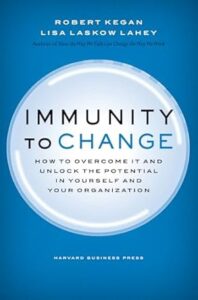
Book Review: Immunity to Change

April 7, 2025 by Dr. Peggy Marshall

Book Review: Immunity to Change

Why this classic on personal and organizational transformation still matters—especially when we’re trying to sustain impact.

One of the most common misconceptions about change is that once people are motivated and committed, the change will naturally stick. But as anyone who’s led or lived through transformation knows, that’s rarely the case. This is exactly the tension that Immunity to Change by Robert Kegan and Lisa Lahey explore with insight, depth, and compassion. And it’s why this book remains a foundational resource for anyone serious about not just starting change but sustaining it.

Immunity to Change begins with a simple but profound observation: people and organizations often fail to follow through on their best intentions, not because they’re lazy or uncommitted, but because they are unconsciously protecting something. Kegan and Lahey call this protection system an “immunity to change.” It’s a psychological defense, often invisible to the individual, that functions much like the immune system in your body: it resists what it perceives as a threat, even if that “threat” is the very change you’re trying to create.

This concept alone shifts the narrative from one of judgment (“Why can’t I just do it?”) to one of curiosity and compassion: “What am I protecting, and why?” The authors introduce a practical, step-by-step method for identifying your stated goal (what you want to change), the behaviors that contradict that goal, the hidden commitments driving those behaviors, and the big assumptions underlying those hidden commitments.

This framework is both elegant and confronting. It helps people name the internal conflicts that quietly undermine their progress, often rooted in fear, self-protection, or outdated narratives. For example, a leader might want to empower their team but continue micromanaging. A coach might want to grow their practice but avoid visibility. A team might want to innovate but cling to familiar ways of working. Once these underlying commitments and assumptions are surfaced, change can finally move from aspiration to integration.

Kegan and Lahey’s work offers a powerful complement to the Sustaining Impact process. It reinforces a core truth, insight is not enough. Sustained change requires awareness of the invisible forces working against your best intentions. This book lives squarely in the Clearing and Courage phases of the Sustaining Impact process—Clearing, because it helps identify and release unconscious blocks, and Courage, because surfacing your inner resistance takes honesty, self-awareness, and emotional resilience.

Importantly, it reminds us that resistance isn’t the enemy, it’s information. Once seen clearly, it becomes a doorway to deeper transformation. This book is a must-read for coaches looking to help clients unlock what’s really holding them back, for leaders who feel stuck in patterns despite clear vision and intention, for teams navigating cultural or strategic shifts that just won’t stick, and for anyone who’s tired of repeating the same patterns and ready to look deeper.

It’s not a quick read, but it’s a transformational one. It requires you to slow down, reflect deeply, and engage with your inner world. But the result is a change that’s not just possible, it’s durable.

Immunity to Change doesn’t promise fast fixes. What it offers instead is something far more valuable: a deeper understanding of what gets in our way—and a practical path to move through it. If you're serious about sustaining impact, this book will help you do the inner work that makes outer change truly possible.


Filed Under: Book Reviews

Sustaining Impact: The Subtle Challenges That Derail Our Best Intentions

April 25, 2025 by Dr. Peggy Marshall

In my work with leaders, changemakers, and purpose-driven professionals, I’ve witnessed a familiar struggle: the inability to sustain impact over time. They start strong, driven by vision, energized by purpose, but somewhere along the way, momentum fades. The culprits aren’t always obvious. It’s not a lack of skill or passion. More often, it’s the invisible clutter that crowds their capacity. It’s the absence of absolute clarity about what truly matters. And most subtly, it’s the old wiring of the brain, patterns of overcommitment, fear of letting go, or resistance to uncertainty that quietly sabotage their best intentions. These are the patterns I’ve seen time and again. And it’s why the work of clearing space, reclaiming clarity, and rewiring our internal narratives is at the heart of sustaining meaningful change.

These challenges often show up in subtle, familiar ways, saying yes when we mean no, mistaking motivation for true alignment, or hesitating to fully commit out of fear. Let’s explore the most common patterns that quietly derail even the best of intentions.

We all begin with good intentions.
A new goal, a meaningful project, a fresh commitment to ourselves or others. At the start, we feel the pull of possibility, the momentum of change. But sustaining that impact? That’s where the work deepens.

Because commitment isn’t just about saying yes. It’s about knowing what we’re saying yes to, and what we’re willing to say no to in the process.

Overcommitting from Ego or Pressure

How often do we say yes from a place of fear, guilt, people-pleasing, or the need to prove ourselves?
We take on more than we have capacity for, driven by a desire to be needed, liked, or admired. It feels like commitment, but underneath, it’s a survival strategy.

Real commitment? It comes from discernment, not just enthusiasm.
It asks: Is this mine to carry?
It reminds us that every yes is a no to something else often our wellbeing, relationships, or deeper priorities.

Confusing Motivation with Alignment

Motivation is fleeting.
It flares up with inspiration, a spark of excitement, but it fizzles when life gets hard, messy, or mundane.

Alignment, though?
That’s the steady pulse beneath the surface.
When motivation fades (and it will), alignment keeps us grounded.
It connects us back to our values, our purpose, our "why."

Next time the energy dips, ask yourself:
Was I riding a wave of hype, or is this still resonant at my core?

Underestimating the Cost of Commitment

It’s easy to commit to a goal when it’s all vision and possibility.
But the cost, the energy, trade-offs, discomfort, that’s where we get surprised.

Every worthwhile commitment has a cost.

  • The cost of time that won’t go elsewhere.
  • The cost of discomfort as we stretch beyond the familiar.
  • The cost of saying no to things we enjoy or things that simply feel easier.

Clarity about the cost isn’t meant to scare us off, it helps us stay when things get hard. It reminds us we chose this path on purpose.

Fear of Disappointment or Failure

Sometimes, we half-commit.
Not because we’re lazy, but because we’re afraid.
Afraid that if we give it our all and still don’t succeed, it might say something about our worth.

Avoiding full commitment can feel safer than risking vulnerability.
But true impact requires risking showing up fully even when the outcome is uncertain.

What would it mean to give yourself permission to commit, not to the outcome, but to the process?

Inconsistent Inner Leadership

We rely on willpower or external accountability, but haven’t built the inner voice that sustains us day by day.

The inner critic talks us out of progress:
"You’re behind."
"You’ll never catch up."
"What’s the point?"

But inner leadership, the voice of the inner champion, reminds us to return with grace:
"This is hard, but you’re still in it."
"Rest if you need to, but don’t quit on yourself."
"Progress isn’t linear."

Sustaining impact means nurturing that inner voice. The one that helps you recommit, not just once, but every day.

Clearing: Making Space for What Matters

Commitment isn’t just about saying yes, it’s also about knowing when to say no.
It’s about clearing space, letting go of what no longer fits.

But clearing is hard.
Not just practically but emotionally.

It can feel like pruning away parts of ourselves.
Like admitting something is overgrown, out of season, or simply no longer ours to carry.

Here are the most common barriers I see in the clearing process:

Emotional Attachment to the Old

We hold onto roles, routines, and responsibilities because they’ve become tied to our identity.

"If I let go of this, who am I?"

Clearing asks us to confront those identities gently.
To honor that we are allowed to outgrow things, even things that once mattered deeply.

Fear of the Unknown

Clearing creates space but also uncertainty.
It’s easier to cling to clutter than face the ambiguity of what’s next.

"At least I know how to manage the chaos I have."

Yet space is where new alignment has room to emerge.
Without it, nothing new can take root.

Invisible Clutter

Not all clutter is physical.

  • Resentment.
  • Self-doubt.
  • Unspoken expectations.
  • Toxic thought loops.

Sometimes, the heaviest weight is the one we haven’t even named yet.

Perceived Waste or Guilt

We stay tethered to projects, goals, or relationships because we’ve invested so much.

"I can’t quit now I’ve already put so much into this."

But sunk costs aren’t a reason to keep sinking.
Letting go can feel like failure but often, it’s freedom.

Lack of Permission or Boundaries

Especially in leadership or caregiving roles, we feel we can’t release responsibilities without disappointing others.

"If I step back, who will carry it?"

But sustaining impact means knowing when to carry and when to release.
With trust that others will rise,
Or that space itself will offer new solutions.

Reflection: Make Space, Release with Intention

These questions are here to guide your clearing process.
To help you create space for what truly matters:

Mental and Emotional Clutter

  • What’s been weighing on my mind lately—quietly or loudly?
  • What belief about myself is no longer true—but I’m still carrying it?

Roles, Goals, and Responsibilities

  • What commitments no longer feel aligned with who I’m becoming?
  • What am I doing out of obligation rather than resonance?

Patterns and Narratives

  • What old story about success, identity, or worth is keeping me stuck?
  • Who am I trying to please or impress—and at what cost?

Practical Clearing

  • What could I let go of this week to create 1% more space?
  • If I cleared just one thing, what would unlock the most energy?

Emotional Permission

  • What would it feel like to release something with kindness instead of guilt?
  • What would I say to a friend who needed permission to let this go?

Sustaining impact isn’t about pushing harder.
It’s about aligning deeper.
It’s about committing with clarity, clearing with courage, and returning to yourself again and again.

We’ll dive deeper into these themes, explore practical strategies, and create space for meaningful reflection. This is an opportunity to reconnect with your why, clear what’s getting in the way, and recommit to the work, and life that matters most.

Zoom link for webinar https://us02web.zoom.us/j/89306258336?pwd=DKiN81Y6PdmueKawvEa6NQlCaoHi14.1


Filed Under: Corporate Coaching Blog

Signs the Inner Critic is Running the Show

May 27, 2025 by Dr. Peggy Marshall

Mind image with confusion


You’re sitting in a meeting. You’ve thought of something insightful—something that could move the conversation forward. But instead of speaking, you stay quiet. A voice inside whispers:

"Don’t say that. It’s probably obvious. Or wrong."

Later, you pause before sending an email you’ve reread six times.

"Is this too much? Not enough? Will they take it the wrong way?"

At night, you replay the day’s moments on a loop—what you said, what you didn’t, what you could have done differently. If this sounds familiar, you’re not alone. That internal script isn’t intuition or wisdom. It’s your inner critic. And for many of us, it’s been speaking for a long time.

The Shape-Shifting Voice

The inner critic doesn’t always sound harsh. Sometimes, it disguises itself as ambition: "You should be further along by now." Or humility: "Don’t make it about you." Or caution: "You don’t want to mess this up."

It might even feel helpful. Like it is keeping you sharp or responsible. But if you trace the impact, the pattern is clear: it makes you smaller. It contracts your confidence. It slows your momentum. It turns leadership into a place of tension rather than alignment.

And if you’re someone who supports others a leader, coach, educator, or creative professional, this isn’t just your internal struggle. It shapes the energy you bring to others. When you are constantly second-guessing yourself, your ability to empower those around you becomes compromised.

The Cost of Letting the Critic Lead

Letting your inner critic take the lead doesn’t just affect your mindset. It has tangible consequences:

  • You miss out on opportunities because you’re too afraid to try.
  • You undervalue your voice in rooms that need to hear it.
  • You overwork, overextend, and overdeliver to prove your worth.
  • You make decisions from fear instead of clarity.
  • You support others from a place of depletion rather than wholeness.

This isn't a personal flaw. It's a learned pattern. But it's a pattern that can be unlearned.

Is Your Inner Critic Running the Show?

The inner critic often flies under the radar, disguised as reason, modesty, or high standards. But its fingerprints are easy to spot. Here are five common signs it may be running the show:

  1. Persistent self-doubt, even in areas where you have experience or success.
  2. Harsh self-talk, including thoughts like "I’ll never get this right," or "What’s wrong with me?"
  3. Difficulty accepting praise or acknowledging your accomplishments.
  4. Perfectionism or procrastination that hides a fear of not being good enough.
  5. Constant comparison that leaves you feeling behind, unworthy, or invisible.

Sound familiar? Then it’s time to meet that voice head-on.

Why This Work Matters

This isn’t just about feeling better. It’s about performing better, leading better, living better. When we quiet the inner critic, we:

  • Gain access to clearer, values-based decisions.
  • Build resilience by replacing shame with self-compassion.
  • Reclaim the energy we’ve spent proving ourselves.
  • Increase our ability to hold space for others, without self-abandonment.

Silencing the inner critic is more than a mindset shift. It’s a leadership imperative.

Five Practices to Quiet the Inner Critic

So how do we shift from inner judgment to inner support? Here are five practices we’ll explore in our upcoming webinar:

  1. Name the Voice Your inner critic thrives in the shadows. Naming it gives you distance and power. You might call it "The Perfectionist," "The Worrier," or "The Impostor." Giving it a name helps you respond with intention, not identification.
  2. Practice Self-Compassion When the critic appears, meet it with kindness. Self-compassion isn’t complacency, it’s courage. Pause. Breathe. Ask: What would I say to a friend in this moment? Then say that to yourself.
  3. Challenge the Thought Critics speak in cognitive distortions: all-or-nothing thinking, catastrophizing, and labeling. Catch the thought. Label it: "I'm having the thought that I'm not good enough." Then question it. Is this absolutely true? Who would I be without this thought?
  4. Anchor in Values When fear is loud, values must be louder. Ask: What matters most in this moment? Let your decisions be led by purpose, not protection.
  5. Get Support and Perspective The inner critic grows stronger in isolation. Coaching, therapy, peer support these offer reflection, reframe, and reinforcement. You don’t have to face the critic alone.

Transforming the Voice

Ultimately, the goal isn’t to banish the inner critic completely. The goal is to shift the balance of power. To replace the critic with an inner coach:

  • From "You’re not good enough" to "You’re learning. Keep going."
  • From "You always mess this up" to "Mistakes are part of growth."
  • From "Don’t try you’ll fail" to "Trying is how you succeed."

This voice already lives within you. The more you practice listening to it, the stronger it becomes.

Join Us: Silencing the Inner Critic Webinar

On Wednesday, June 12, join us live for a webinar designed to help you:

  • Identify your inner critic’s unique voice
  • Reframe your internal narrative
  • Develop rituals of resilience and self-support
  • Replace fear-based habits with values-led action

Whether you're a coach, leader, educator, or just someone ready to stop playing small, this session will offer tools, insight, and community to help you rise into your full potential.

Because the voice you listen to shapes the life you lead.

Ready to turn the volume down on doubt?

https://us02web.zoom.us/j/89306258336?pwd=DKiN81Y6PdmueKawvEa6NQlCaoHi14.1


Filed Under: Corporate Coaching Blog

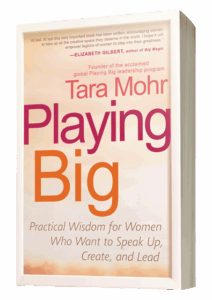
Book Review: Playing Big by Tara Mohr

May 28, 2025 by Dr. Peggy Marshall

Silencing the Inner Critic and Stepping Into Your Voice

Playing Big Book coverIn a world that often encourages us to play it safe, stay small, and second-guess our brilliance, Playing Big by Tara Mohr is a powerful guide for anyone ready to do the deeper inner work of showing up fully and unapologetically.

Mohr’s approach isn’t about hustle or hype it’s about returning to your inner knowing, quieting the voice of fear, and learning to trust your own wisdom. At the heart of the book is her framework for identifying and gently disarming the inner critic, a voice many of us have internalized so deeply that we mistake it for truth. With compassion and clarity, she invites readers to differentiate between the voice of self-doubt and the quieter, wiser voice within the “inner mentor.”

Throughout the book, Mohr integrates personal stories, client experiences, and accessible tools that help readers move from hesitation to action. Her reflections on unhooking from praise and criticism, navigating fear, and communicating with clarity and power are particularly relevant for leaders, creatives, and anyone working to align their outer impact with their inner truth.

For coaches, this book offers not just insights, but practices and tools you can use with clients to help them name their inner critic, shift limiting narratives, and play bigger on their own terms. It’s also an ideal companion for those navigating career change, visibility blocks, or seasons of reinvention.

Playing Big doesn’t promise instant confidence. What it offers instead is something far more sustainable: a grounded, wise, and courageous path toward self-trust.


Filed Under: Book Reviews

Summer Is for Growing: Choosing Renewal Over Routine

June 16, 2025 by Dr. Peggy Marshall

Library with open book
For many professionals, summer feels like a strange in-between. The calendar slows, but the pressure to stay productive lingers. The world seems to exhale but only briefly before the back-to-school or fiscal-year energy ramps up again. We tell ourselves we’ll catch up, rest, maybe reset. But by the time August rolls around, we’re often left wondering: Where did the time go?

What if this summer could be different? What if summer wasn’t a break from learning, but an invitation into a different kind of growth one that’s not about working harder, but about aligning deeper?  At Global IOC, we believe that sustainable impact doesn’t happen by accident. It happens when leaders, coaches, and change-makers pause long enough to ask themselves the deeper questions:

--What unfinished learning or insight deserves more space this season?
--What qualities do I need to cultivate to deepen not just expand my leadership?
--What rhythms, rituals, or supports will help me sustain what I’ve learned?

Summer offers the space to explore those questions and to begin living into the answers.

Growth Looks Different in Every Season

In spring, we plant. In fall, we harvest. But summer? Summer is for cultivating. It’s the season when growth is happening just below the surface. Quietly. Consistently. Almost invisibly. It’s when roots deepen and foundations strengthen.

As Parker Palmer writes in Let Your Life Speak, “Before you tell your life what you intend to do with it, listen for what it intends to do with you.” This kind of listening takes time. And summer offers it. For leaders and coaches, this same seasonal rhythm applies. Summer may not be packed with performance reviews, project launches, or strategy rollouts but that’s exactly why it’s a powerful time for inner development. When we take time to clear mental clutter, realign with what matters, and recharge our energy, we don’t just prepare for the next quarter we prepare for the next chapter.

This summer, we’re offering three unique ways to support that process each one designed to foster meaningful growth without overwhelm.

1. Rediscover What Drives You
DISC and Values-Based Leadership Training
Whether you’re a new coach, an experienced leader, or somewhere in between, summer is a perfect time to reconnect with your core motivations. Our DISC and Values-Based Training goes beyond labels and behavior patterns it helps you articulate how you want to lead and why you lead the way you do.

Susan David, author of Emotional Agility, reminds us that when leaders become emotionally flexible and values-connected, they’re more likely to adapt to change and respond with clarity rather than react from fear. This training supports that agility by giving you practical language, awareness, and tools for understanding not only your style but how your core drivers influence your decisions, relationships, and team dynamics. If you’re feeling out of sync, stuck in reactive patterns, or unsure of how to motivate those around you, this training is your reset button.

Whether you're looking to deepen your own skills or enhance your team's effectiveness, our DISC and Values-Based Training offers a flexible, high-impact pathway.  For those interested in certification, this training provides the foundational knowledge and credentials to integrate DISC-Values assessments into your coaching practice, leadership development programs, or internal training initiatives. You’ll gain not only theoretical insight but also the practical ability to administer assessments and debrief individuals and teams building capacity as a trusted facilitator of growth. If that is not a pathway for you, why not consider strengthening your team by offering the DISC-Values assessment and team debrief?

Using the DISC-Values assessment to strengthen your team offers a range of benefits that go far beyond personality insights. It helps improve communication across styles, enabling team members to better understand one another and reduce miscommunication. It fosters greater collaboration and trust by creating a shared language for working through differences. Teams gain clarity as they align roles and responsibilities with individual strengths and motivators, which also helps develop emotionally intelligent leaders who can flex their style to meet the needs of others. The result is increased engagement and retention, as individuals feel seen, valued, and empowered. Over time, DISC-Values supports the development of a culture rooted in feedback and growth and builds the resilience and adaptability required to navigate change together with confidence.

2. Release the Weight of Emotional Drama-Detach from Drama Summer Intensive
Let’s be honest: emotional drama is exhausting. Whether it shows up as inner narratives that spiral into self-doubt or workplace dynamics that drain your energy, drama derails impact. It clouds judgment, fractures communication, and saps resilience.

The Detach from Drama Summer Intensive was created as a high-impact program built for leaders and coaches who want clear, research-based tools to navigate the emotional complexity of work and life. Grounded in the soon-to-be-released book Detach from Drama, this intensive introduces a practical model to help you understand how drama starts, why it escalates, and what you can do to change the cycle.

You’ll learn to:
Recognize the patterns of emotional reactivity before they hijack focus
Help others regulate emotional triggers with proven strategies
Reframe meaning and reduce internal drama narratives
Guide the interruption of emotional contagion and lead others out of chaos

Clarity is hard to access when we’re operating from a place of reactivity, fear, or emotional overload. This program helps you reclaim that clarity not just for the people you lead or support, but for yourself. And it’s not just theory. Lisa Feldman Barrett’s neuroscience of emotion reminds us that emotions are not fixed reflexes, we construct them. That means we have agency. The Detach from Drama model reminds us to use that agency wisely to pause, shift perception, and reauthor the story you’re living and sharing. Whether you’re supporting clients through charged transitions or navigating team tension, you’ll walk away with the language, tools, and insight to lead with steadiness even when the emotional waters rise.

3. Sustaining Impact: From Inspiration to Integration
Many of us know how to set goals. Fewer know how to sustain them. That’s why we created Sustaining Impact, a program rooted in the realities of growth, commitment, and renewal and based upon the upcoming book by the same name. What makes this offering unique is its flexibility. It allows each participant to personalize their journey based on their most pressing needs and current challenges. The process begins with a free brief Sustaining Impact self-assessment designed to identify which of the nine pathways to sustaining change may be underdeveloped or misaligned. Based on this, participants receive a customized summary report with resources highlighting their three lowest-scoring pathways as these are often where the most leverage for transformation exists.

From there, participants have two additional options:

Extended Assessment + Customized Action Plan
For those who want to go deeper, the longer version of the assessment includes 10 additional questions per the three low-scoring areas. This generates a more nuanced report to build a customized action plan to begin addressing these obstacles through targeted reflection and behavior shifts. This option includes an hour of coaching with the book’s author.

Six-Session Coaching Track
For individuals ready to accelerate their growth with guided support, a six-session coaching engagement with the book’s author is offered. These sessions are structured around the results of the brief or extended assessment and are tailored to help participants integrate the tools, rituals, and mindsets needed to sustain their desired impact.

James Clear, author of Atomic Habits, reminds us that identity-based change is the most durable: “Every action you take is a vote for the type of person you wish to become.” Sustaining Impact provides not only clarity on what needs to shift but a practical, empowering framework to help you become that person.

Whether you want to clarify your purpose, manage energy more wisely, establish healthy boundaries, or navigate resistance and renewal, this program meets you where you are and walks with you toward where you want to go.

A Different Kind of Summer School
What these three offerings have in common is simple: They invite transformation from the inside out. They aren’t about checking a box or cramming in more content. They’re about slowing down enough to listen to what you really need and then giving yourself permission to receive it. This summer, we invite you to trade the pressure to “get ahead” for the gift of becoming aligned. Because when you reconnect with your values, release emotional weight, and commit to what truly matters, you don’t just grow. You thrive. And when you thrive, so do the people you serve.

Filed Under: Corporate Coaching Blog

Beyond the Spark: Why We Don’t Sustain Change

July 2, 2025 by Dr. Peggy Marshall

Excited group of people with colored square background

Let me say something that might be unpopular.

I’m tired of the motivational speakers and social media influencers who sell inspiration like it’s the whole story. You know the ones they show up on big stages with lights, music, and perfectly curated soundbites. They charge thousands for access. They get the crowd to cry, cheer, and dream big and then they walk away.

No follow-up. No integration. No relationship. Just a dopamine hit and a merch table.

Don’t get me wrong people want hope. And I’ve been moved, even transformed, by powerful moments or messages. But here's what I’ve learned again and again in my work with leaders, teams, and change-makers:

Inspiration is the spark. It is not the fire.

The fire is built afterward. In the friction. In the repetition. In the quiet discomfort of trying to live what you felt was true once the room is empty and the buzz has worn off.

So why don’t we sustain change—when we know so much about how?

Over the past two decades, more than 30,000 books have been published on personal development and performance psychology. They offer steps, strategies, habits, and hacks. We’ve never had more access to information on how to change our health, our mindset, our leadership, our lives. And yet, real transformation still feels elusive.

So many of us start strong and fall back. We set bold intentions. We attend the retreat. We finish the course. We write in journals, plan, visualize, and promise ourselves. And still two weeks later, we slip. The momentum fades. The old pattern reappears. And worst of all, we internalize it as failure.

We think: Maybe I’m not disciplined enough. Maybe I didn’t want it badly enough. Maybe I’m just not cut out for this. But here’s the truth: you are not the problem.

The real problem isn’t change itself, it’s how we’ve been taught to relate to it. Most systems whether in books, workshops, or coaching models, focus on behavior. They ask, What do you want to do differently? but rarely ask the deeper questions: How do you feel about the version of you that came before? What is your relationship to the new person emerging?

But change isn’t just about doing it, it’s about transforming. And transformation doesn’t happen through information alone. It unfolds through connection, through meaning, through daily practice. Identity doesn’t shift because we read a book or set a goal, it shifts when we learn to hold ourselves with compassion, honor the past, and step into a more aligned future. Until we change how we relate to change, we’ll keep mistaking performance for transformation and wondering why it doesn’t last.

The Myth of Motivation

One of the biggest lies we’ve absorbed is that motivation is enough. That if we just stay inspired, we’ll stay on track. But motivation is emotional, it rises and falls. It’s affected by sleep, stress, hormones, setbacks, and life. It can’t hold the weight of sustainable change on its own. And when we rely on it as our only fuel, we collapse the moment it dips. This is why so many people crash after the high. A leader leaves a conference fired up, only to feel lost two weeks later. A team returns from a retreat energized, only to fall back into old dynamics. A coaching client gains clarity, only to spiral when real life doesn’t reflect the shift they envisioned.

And again, they blame themselves. Not the system. Not the missing support. Not the fact that no one taught them how to stay in the work after the spark.

What’s Missing Isn’t Passion. It’s Practice.

What’s missing from so many personal growth experiences isn’t desire it’s design.

We aren’t taught how to stay with the discomfort that follows awareness. We aren’t given the tools to hold tension between who we’ve been and who we’re becoming. We aren’t guided through the middle the part that isn’t glamorous, but absolutely essential.

Real change requires a shift in relationship. Not just with the new behavior, but with the old one, too. In other words, we don’t just need to adopt new habits we need to honor, examine, and gently release the ones that once made us feel safe or successful. That’s the part no one talks about. Because it’s not sexy. It doesn’t sell as easily. It requires a slower, more soulful conversation.

From Spark to Sustaining Impact

That’s why I wrote Sustaining Impact which will hit the stores next month!  Not to offer a hype machine or a ten-step blueprint. But to create something different. Something slower, deeper, and more honest. A rhythm. A practice. A framework that honors the human complexity of change and stays with you through the middle.

Sustaining Impact is for the ones who have tried and stumbled. For the leaders who’ve left conferences on fire, only to feel the burnout a month later. For the high achievers who’ve read all the books and still feel like something’s missing.

It’s not about doing more. It’s about becoming more aligned with who you are, what you value, and what you’re ready to embody. Sustained impact is not built on intensity. It’s built on integration. That means reconnecting to your purpose when things get hard. Returning to your values when the noise gets loud. Practicing presence when perfection tries to take over.

What We Really Need

We don’t need more motivational slogans. We need more guides through the middle. We need conversations that don’t just ask what we want to change, but why it matters, how it feels, and who we’re becoming along the way. We need leaders and coaches who are willing to do the unsexy work of integration who know that real success isn’t just in the launch, but in the sustain.

We need to stop measuring change by how fast we get results and start asking how deeply we’re living the values we claim to hold. It’s a daily return. A quiet choice. A deeper rhythm. If you’ve ever felt like you were the only one struggling to hold onto the spark after the high wore off, I want you to know: you’re not alone. You’re just in the middle. And you’re right where the real work begins.

Ready to Move from Insight to Integration?

You don’t have to navigate the middle alone.

Take the free 45-item Sustaining Impact Self-Assessment to uncover your three lowest-scoring pathways, the areas most likely to hold you back from lasting change. Whether you’re struggling with clarity, commitment, momentum, or renewal, this personalized tool will help you identify where to reinvest and how to build forward.

You will receive a report with resources for working with your three lowest pathways.

Take the free assessment here!

Schedule a private coaching session with the author, Dr. Marshall, to unpack your results and create a roadmap

Sign up for the 3-month Sustaining Impact coaching package, designed to help you embody change with rhythm, support, and accountability

Click here for more information on those two programs.
Sustaining Impact Executive Coaching - Global Institute of Organizational Coaching

Don’t just spark change. Let’s sustain it.

Filed Under: Sustaining Impact

In Good Company: The Role of Others in Sustaining Change

July 17, 2025 by Dr. Peggy Marshall

Change often begins in solitude with a whisper, a longing, a decision made in the privacy of our own inner world. We feel the pull to live more honestly, to lead more courageously, to let go of old patterns or step into something new. That moment of choosing can feel deeply personal, even vital. But while the decision to change may begin alone, the capacity to sustain that change rarely grows in isolation.

We live in a culture that glorifies individual effort. We celebrate self-made stories and reward perseverance. But the truth is, transformation is relational. It unfolds more fully, more sustainably, when we are witnessed, supported, and held.

When we try to grow alone, we often internalize every setback as a flaw in character. We assume our fatigue means we’ve failed. We question whether we’re strong enough, committed enough, or deserving enough to keep going. But in the presence of others who are also on the path others who understand the messiness of change, the narrative begins to shift. What felt like personal deficiency begins to be seen as a natural part of the journey.

Parker Palmer writes, “The human soul doesn’t want to be advised or fixed or saved. It simply wants to be witnessed.” In times of change, what we often need most is not more advice, but presence. People who can sit with us in the in-between, when the old way no longer fits but the new path is still being formed. People who can remind us who we are when we forget and gently hold us accountable to who we’re becoming.

This kind of community allows us to show up without the need to perform. It makes room for authenticity and honors the natural pace of becoming. Rather than pushing for progress or certainty, it offers a kind of spaciousness a place where we can soften into our own unfolding. In Palmer’s language, it becomes a “circle of trust,” not necessarily formal or structured, but grounded in mutual respect. In that space, the masks can fall away, and truth can surface without fear.

Brené Brown reminds us that “Connection is why we're here. We are hardwired to connect with others.” In her research on shame and vulnerability, she speaks of how isolation magnifies our inner doubts. Without connection, our fears echo louder. Our stories go unchecked, and we can lose perspective. But when we risk being seen when we let ourselves be known in both our courage and our uncertainty, we find something vital. Not just support, but resonance. The recognition that we are not alone and never were.

Community, in this way, becomes more than a support system. It becomes a mirror. A space where our deeper truth is reflected back to us, not distorted by performance or pretense. It reminds us that growth is not about perfection. It’s about presence. And presence is made more possible when we’re not carrying it all alone.

In the Sustaining Impact framework, we often speak of rhythm, identity, and integration as core components of lasting change. But what sustains those components, what gives them texture and breath is community. A friend who calls you back to your purpose when your energy wavers. A mentor who helps you distinguish fear from intuition. A team who names your progress when you’re too tired to see it yourself. These connections don’t replace the inner work; they amplify it and make it livable.

Community matters not only in times of struggle, but in moments of celebration. It is easy to overlook our own progress, especially when it arrives in subtle or incomplete forms. We move quickly from one effort to the next, often brushing past what we’ve done. Yet something meaningful happens when another person sees what we might have missed. When a trusted voice affirms, “That mattered,” the moment becomes fuller, more real. Emotionally and physiologically, we begin to register the impact. Our bodies settle and our minds lean in. The path forward feels just a little more possible. Encouragement, when grounded in relationship, reminds us that we are not alone and that the work we’re doing is worth continuing.

We must remember that not every space invites growth. While community can be a profound source of strength, not all connections nourish who we are becoming. Some reinforce outdated roles, expectations, or identities we’ve outgrown. They ask us to dim, to edit, to perform. Part of sustaining impact is learning to notice the difference to recognize the places where we feel seen and supported, and those where we find ourselves shrinking in order to belong. True community does not require self-abandonment. It makes room for our full presence. It invites us to bring our complexity, our truth, and our evolving sense of self without apology.

This doesn’t mean surrounding yourself only with like-minded people. In fact, some of the richest growth happens in diverse, even challenging, communities where your worldview is expanded, where assumptions are lovingly questioned, where you learn to stay in dialogue even when it’s uncomfortable. What matters is not uniformity, but mutual respect. A shared commitment to holding space for truth, curiosity, and transformation.

You don’t need a large network to feel supported. Often, it is a small circle of intentional relationships that carries the greatest weight. A trusted peer who listens without judgment. A thoughtful coach who reflects your values back to you. A community of practice where growth is shared, not performed. Or a single conversation partner who helps you see more clearly and feel more deeply. These relationships do not solve the journey for you, but they walk beside you in a way that makes the journey more honest, more grounded, and more whole.

And when change becomes hard and it will, community becomes the ground that holds us. Not to carry our work, but to remind us we’re not carrying it alone. That we are seen, even in the struggle. That we can reconnect to the commitments we’ve made, because someone else is holding that vision with us.

As you reflect on your own journey whether you’re at the beginning of a change, in the middle of a plateau, or somewhere in between ask yourself not only what you want to change, but who is walking with you. Who helps you stay honest? Who celebrates your becoming? Who gently calls you back to what you said matters most?

And just as meaningful, consider whose journey you are accompanying. Whose growth you are quietly witnessing. In offering presence to others, we deepen our own. Community is not simply supporting change, it is part of the transformation itself. Through relationship, we remember our shared humanity. We grow into alignment. And we begin to embody the kind of change that lasts.

Call to Action!

Now I have a call to action for this community, a faculty member, Carol Assalian, is completing her masters thesis at the University of Wales, Trinity St. David.  She needs participants in her study which is examining the role of leaders/supervisors in Self-Efficacy.  It’s a brief assessment, should not take longer than five-eight minutes and can be accessed here.  Your participation will be greatly appreciated!

Questionnaire LINK :

https://forms.cloud.microsoft/e/bp3nb7Vznt


Filed Under: Sustaining Impact

  • « Go to Previous Page
  • Page 1
  • Interim pages omitted …
  • Page 9
  • Page 10
  • Page 11
  • Page 12
  • Page 13
  • Go to Next Page »
  • | Home |
  • Leader Development Pathways
  • | Executive Coaching |
  • Team Coaching
  • | Sustaining Impact |
  • Detach from Drama
  • | Coach Cultures at Global IOC |
  • My Account |

Copyright Global IOC© 2026