• Skip to main content

Global Institute of Organizational Coaching

Global Coaching Certification

  • Explore Pathways
  • Dr Peggy’s Books
  • Resources
  • Log In
  • About

Dr. Peggy Marshall

Book Review – How Minds Change by David McRaney

February 24, 2025 by Dr. Peggy Marshall

Coaching Corner - Book Review

How Minds Change by David McRaney


David McRaney’s How Minds Change offers rich insights that can be directly applied to coaching practice, helping you to support your clients in navigating belief systems and fostering transformation. One key takeaway from the book is the understanding that changing one’s mind is rarely a linear process. In a coaching context, this means recognizing that shifts in perspective often require a safe, open space for dialogue and reflection. Coaches can draw on McRaney’s exploration of cognitive dissonance and the gradual nature of belief change to guide clients gently through challenging shifts in thinking, rather than expecting immediate breakthroughs.

The book’s emphasis on the role of persuasion—both as a force for manipulation and as a pathway to genuine transformation—is especially relevant in coaching. By understanding how persuasive narratives, social dynamics, and emotional factors influence decision-making, coaches can help clients identify the external influences that may be reinforcing unhelpful beliefs. This awareness can empower clients to develop greater self-reflection and critical thinking, enabling them to filter out coercive influences and embrace change on their own terms.

Moreover, McRaney’s insights into how open-minded dialogue and reflective self-examination can drive change are invaluable for coaching practice. As a coach, you can model and facilitate conversations that encourage clients to question their assumptions and explore alternative viewpoints. This process not only helps clients gain clarity about their own beliefs but also builds resilience, as they learn that change is both possible and a natural part of growth.

Finally, by integrating the lessons from How Minds Change into your coaching toolkit, you can enhance your ability to tailor interventions based on a deep understanding of human psychology. Whether you’re helping clients overcome limiting beliefs or guiding them through transitions, the book’s blend of research-based insight and relatable storytelling serves as a reminder that transformation is complex, yet accessible through empathetic, evidence-based coaching. Embracing these insights can ultimately lead to more powerful, lasting change in your clients' lives.

To view the entire webinar on this topic, click here.

Filed Under: Book Reviews

Reframing Coaching Research

February 24, 2025 by Dr. Peggy Marshall

The perception of research—especially within the coaching field—has long been a mixed bag of awe, skepticism, and even intimidation. Many coaches, particularly those who have built their practice on intuitive and experiential methods, can sometimes view research as overly academic or disconnected from the real-life challenges their clients face. However, when we take a closer look, research is not a rigid, arcane discipline reserved solely for academics; it’s a dynamic tool that, when demystified, can greatly enhance the quality and effectiveness of coaching.

At its core, research is about inquiry, discovery, and validation. It involves asking questions, collecting data, and drawing conclusions based on evidence. For coaches, this process may seem daunting at first—filled with complex terminology, statistical analyses, and long-winded literature reviews. Such a perception can create a barrier, leading some practitioners to bypass research entirely, favoring anecdotal methods or untested theories instead. This tendency is understandable: the language of research often appears technical, and the process can feel removed from the day-to-day realities of coaching.

However, reframing how we perceive research can transform it from an intimidating hurdle into a powerful ally. Research is not about replacing the human element of coaching; it’s about reinforcing it with insights that have been systematically validated. Evidence-based research offers a way to ground our intuitive practices in data and proven methods. For example, studies in neuroscience and psychology have uncovered how reflective practices can foster emotional regulation, or how specific goal-setting techniques lead to better outcomes. When these findings are translated into actionable strategies, they serve as a bridge between the science of human behavior and the art of coaching.

Another important aspect of the perception of research is its role in continuous learning. The world of behavioral science is in constant flux. New studies challenge old assumptions, and innovative methodologies emerge regularly. For coaches, staying up-to-date with current research is not about memorizing facts; it’s about cultivating a mindset of curiosity and lifelong learning. By integrating research into our practice, we remain open to new possibilities and are better equipped to tailor our interventions to the unique needs of our clients. This ongoing education is an investment in our professional growth and a signal to our clients that we are committed to offering the most effective and current strategies available.

Moreover, the perception of research can shift when we start to see it as a tool for reflective practice. Reflection and research go hand in hand. When coaches take time to analyze their methods, assess client outcomes, and refine their approaches, they are engaging in a process similar to academic research—only with a practical, immediate application. Reflective practice allows us to question our assumptions, evaluate the effectiveness of our interventions, and continuously improve our coaching strategies. In this light, research becomes not an external imposition but an integral part of our day-to-day work, providing us with feedback loops that drive both personal and professional evolution.

It is also worth noting that research can enhance our credibility as coaches. In today’s information-rich society, clients are increasingly savvy and value practitioners who can back up their methods with scientific evidence. When you communicate that your approach is supported by research, you not only build trust with your clients but also differentiate yourself in a competitive field. This credibility is crucial in establishing a coaching practice that is both respected and effective. Clients are more likely to commit to a process when they understand that the techniques employed have been rigorously tested and proven to work across various settings.

Despite these benefits, the perception of research remains a challenge largely because of how it is presented. Many research articles and academic papers are written in a style that is inaccessible to those without a specialized background. To counter this, it’s important for coaches and researchers alike to translate these findings into plain language. Summaries, infographics, and workshops can help demystify research, breaking down complex ideas into digestible insights that can be directly applied to coaching practice. When research is communicated in clear, everyday language, it becomes much more approachable and relevant.

Ultimately, the perception of research is evolving. As more coaches embrace evidence-based practices, the field is witnessing a gradual shift from viewing research as an esoteric discipline to recognizing it as an essential component of effective coaching. By understanding that research is fundamentally about exploration, validation, and improvement, coaches can begin to see it as a natural extension of their work. Integrating research not only strengthens our methods but also enriches our understanding of the human experience—helping us guide our clients toward deeper self-awareness, resilience, and growth.

While the perception of research has historically been one of complexity and distance, reframing it as a tool for continuous learning, reflective practice, and enhanced credibility can transform it into a cornerstone of effective coaching. When demystified and translated into accessible language, research empowers coaches to create more tailored, impactful interventions that bridge the gap between theory and practice, ultimately leading to richer, more transformative outcomes for clients.

Have you ever felt overwhelmed or even intimidated by the complexities of research? If so, join us on March 5th at 11 am EST for an engaging webinar and dialogue titled “Demystifying Coaching Research”. In this session, Professor Annette Fillery-Travis—an esteemed coach practitioner at the Fellow level—will share her expert insights on how to effectively integrate research into your coaching practice. She’ll discuss practical strategies for breaking down complex concepts, address common misconceptions, and offer real-world examples that bridge the gap between academic theory and everyday coaching. This webinar is designed to empower you to transform research from an intimidating hurdle into a powerful tool for continuous learning and impactful coaching. Whether you're just starting out or looking to deepen your understanding, this is your opportunity to connect with like-minded professionals, ask questions, and gain clarity on how research can enhance your practice.

Zoom link: https://us02web.zoom.us/j/89306258336?pwd=DKiN81Y6PdmueKawvEa6NQlCaoHi14.1

Filed Under: Corporate Coaching Blog

Leading and Coaching Through Uncertainty

March 3, 2025 by Dr. Peggy Marshall

In today's fast-paced, ever-changing world, leaders and coaches are constantly navigating ambiguity—uncertain markets, shifting workplace dynamics, and unpredictable challenges. While ambiguity can create stress and hesitation, it also presents an opportunity for growth, innovation, and adaptability. The best leaders and coaches don’t fear uncertainty; they embrace it, guiding their teams and clients through the fog with clarity, confidence, and resilience.​

Ambiguity arises when there are no clear answers, when the path forward is uncertain, and when traditional decision-making frameworks may not apply. It often manifests in unclear goals, shifting priorities, uncertain external conditions such as economic shifts or industry disruptions, complex interpersonal dynamics, and conflicting or unreliable information. In such situations, leaders cannot rely solely on past experiences or established strategies; instead, they must embrace a mindset of adaptability and experimentation.

Herminia Ibarra, in “Act Like a Leader, Think Like a Leader”, argues that leaders must experiment with new behaviors and mindsets to effectively adapt to uncertainty, emphasizing the value of learning through action rather than waiting for complete clarity. She highlights that effective leaders shift their identity and decision-making approach by engaging in small experiments, testing different strategies, and adjusting based on feedback. This active approach enables leaders to remain agile, make informed decisions in the face of uncertainty, and avoid the paralysis that often accompanies ambiguity.

One of Simon Sinek’s most influential concepts is the idea of the “infinite game,” from the book by the same name, which contrasts with the finite mindset many leaders adopt. Leaders who play a finite game focus on short-term wins, competition, and immediate outcomes, whereas those with an infinite mindset understand that leadership is an ongoing journey of adaptability and continuous progress. This approach is particularly useful when dealing with uncertainty, as it shifts the focus from trying to "win" in the short term to sustaining long-term success through innovation and resilience. Leaders with an infinite mindset accept that change is constant and use it as an opportunity for learning and growth rather than a threat. By shifting from “How do we win?” to “How do we keep improving?”, leaders can foster a culture that embraces ambiguity rather than fearing it. ​

One of the most effective ways to lead through uncertainty is to reframe it as an opportunity rather than a roadblock. Instead of seeing a lack of clarity as a problem, leaders can encourage curiosity and exploration by asking, “What new opportunities could emerge from this uncertainty?” Nathan and Susannah Harmon Furr, in “The Upside of Uncertainty”, emphasize that reframing uncertainty as a gateway to possibility rather than a threat is a fundamental skill for leaders and individuals navigating the unknown. Their research highlights that those who successfully manage uncertainty do so by shifting their mindset from fear-based reactions to a perspective that embraces ambiguity as an opportunity for growth, innovation, and resilience.

Equally important is the ability to cultivate comfort with not knowing. Leaders and coaches don’t need to have all the answers; rather, they create environments where learning, experimentation, and adaptation are valued over immediate certainty. The Furrs argue that reframing uncertainty reduces paralysis and increases confidence in taking action, helping individuals recognize that discomfort in the unknown is often a precursor to breakthrough moments. Encouraging a mindset of continuous learning and progress over perfection helps teams and individuals move forward with greater confidence, adaptability, and openness to new possibilities.

Decision-making agility is another crucial skill in times of ambiguity. Instead of waiting for complete clarity, leaders can take small, testable actions and adjust based on new information. Seeking multiple perspectives before making a choice and maintaining flexibility allow for more informed and adaptable decisions. However, amid all this uncertainty, anchoring in core values and long-term purpose provides a much-needed foundation. When external circumstances shift, relying on deeply held values can serve as a compass, helping individuals and teams make decisions that align with their mission. ​

Psychological safety also plays a critical role in navigating uncertainty. Amy Edmondson, a leading expert on psychological safety, emphasizes that when individuals feel safe to express ideas, take risks, and admit mistakes without fear of punishment or ridicule, they are more likely to engage, learn, and adapt in uncertain environments. Ambiguity can trigger fear, but when leaders intentionally foster a culture of openness, curiosity, and trust, they create space for healthy risk-taking, experimentation, and collective problem-solving. Edmondson’s research highlights that teams operating in psychologically safe environments outperform others in navigating complexity and change, as they are more willing to ask questions, challenge assumptions, and learn from failures rather than retreating into silence or avoidance.

Another key to leading through ambiguity is communication. Brené Brown, a leading expert on leadership and vulnerability, emphasizes that clear, honest, and transparent communication is essential for building trust and resilience in uncertain times. In her book “Dare to Lead”, Brené Brown argues that leaders who embrace transparency—acknowledging what they know, what they don’t know, and what they are doing to find answers—create environments where individuals feel more secure and engaged. Even when all the answers aren’t available, maintaining open and consistent communication helps ease uncertainty and fosters a culture of trust.​

Coaching becomes especially powerful in times of ambiguity because it equips individuals with the mindset and skills needed to navigate uncertainty. By fostering confidence in decision-making, helping individuals recognize their strengths, reframing challenges as opportunities, and guiding them in creating actionable steps even without complete clarity, coaching enables forward momentum. Coaches who lead with curiosity, presence, and adaptability empower their clients not just to manage ambiguity but to embrace it as a catalyst for growth and transformation.

Ultimately, we can wait but ambiguity isn’t going anywhere. It has become a central part of leadership, work, and life. The best leaders and coaches recognize that their role isn’t to eliminate uncertainty but to help others build the resilience, adaptability, and confidence needed to navigate it successfully. By fostering a focus on values, maintaining a learning mindset, and embracing uncertainty as a space for growth, leaders and coaches can transform ambiguity from a source of fear into a catalyst for innovation and progress.​

For members only of The Global Coaching Network, a book study group will be meeting to discuss “The Upside of Uncertainty”  beginning March 27th.  If you are a member, click here to register for the book club.


Filed Under: Corporate Coaching Blog

Book Review – The Upside of Uncertainty by Nathan Furr & Susannah Harmon Furr

March 3, 2025 by Dr. Peggy Marshall

Coaching Corner - Book Review

The Upside of Uncertainty by Nathan Furr & Susannah Harmon Furr

Overview

The Upside of Uncertainty reframes the unknown as a source of possibility rather than fear. Nathan and Susannah Furr introduce a practical “first-aid cross” model with four key areas—Reframe, Prime, Do, and Sustain—to help individuals and leaders navigate uncertainty with confidence. Drawing from research, interviews, and real-world examples, the authors provide actionable strategies for shifting mindsets, preparing for ambiguity, taking decisive action, and building long-term resilience.

Key Takeaways

  • Uncertainty is Natural and Manageable – Rather than fearing the unknown, embracing it can lead to growth and innovation.
  • Mindset Shapes Experience – Reframing uncertainty as opportunity fosters confidence and adaptability.
  • Practical Strategies Help Navigate the Unknown – Tools like breaking uncertainty into manageable steps and strengthening emotional resilience are essential.
  • Reflection Fuels Growth – Learning from past experiences builds confidence and adaptability for future challenges.

Coaching Tips for Navigating Uncertainty

  1. Reframe Uncertainty as Opportunity
    Help clients shift their perspective by asking:
  • What new doors could this open for you?
  • What’s the best possible outcome in this situation?
  1. Prepare Clients for Ambiguity
    Guide clients to build emotional resilience by:
  • Identifying past successes in uncertain situations.
  • Practicing mindfulness, visualization, and journaling.
  • Establishing routines to maintain stability.
  1. Encourage Small, Intentional Steps
    Overcome indecision by:
  • Taking one small step forward instead of waiting for full clarity.
  • Viewing failures as learning opportunities.
  • Developing an experimental mindset.
  1. Strengthen Decision-Making in Uncertainty
    Support clients by:
  • Using “What if?” scenarios to explore possibilities.
  • Teaching decision-making frameworks (e.g., risk vs. reward).
  • Prioritizing progress over perfection.
  1. Build Emotional Resilience
    Help clients manage stress and uncertainty by:
  • Developing self-awareness of emotional responses.
  • Practicing gratitude, mindfulness, and movement-based coping strategies.
  • Grounding decisions in core values.
  1. Sustain Growth Through Reflection
    Encourage clients to:
  • Keep a “resilience journal” to track past wins.
  • Celebrate small successes to reinforce confidence.
  • Reflect on lessons learned for future challenges.

Final Thoughts

The Upside of Uncertainty offers a hopeful, pragmatic approach to navigating ambiguity. Its insights provide valuable tools for leaders and coaches to transform uncertainty into a catalyst for growth, innovation, and resilience.


Filed Under: Book Reviews Tagged With: ambiguity, growth, opportunities, track your wins, uncertainty

Well-Being at Work: Creating a Culture of Support, Balance, and Coaching

March 11, 2025 by Dr. Peggy Marshall

Well-being at Work: Creating a Culture of Support, Balance, and Coaching

In today’s fast-paced work environment, well-being at work is no longer just a perk, it’s essential. A healthy, engaged workforce leads to higher productivity, lower turnover, and a more positive company culture. But achieving workplace well-being goes beyond offering gym memberships or mindfulness apps. It requires a holistic approach that considers physical, emotional, and psychological health, while also integrating coaching strategies that foster resilience, engagement, and long-term success.

Why Workplace Well-being Matters

Employee well-being is directly linked to performance, job satisfaction, and retention. Studies show that when employees feel mentally and physically well, they are more engaged, creative, and resilient. Conversely, burnout, stress, and a lack of support lead to absenteeism, disengagement, and high turnover rates.

According to “Wellbeing” by Tom Rath and Jim Harter, workplace well-being is a key predictor of overall life satisfaction. Their research, based on Gallup’s global studies, found that employees who experience high workplace well-being are twice as likely to thrive in their personal lives. Additionally, “The Power of Full Engagement” by Jim Loehr and Tony Schwartz highlights that workplace performance isn’t just about time management, it’s about energy management. Their research shows that employees who balance energy expenditure with renewal experience higher engagement, resilience, and job satisfaction. Organizations that integrate coaching into their well-being strategies report higher employee engagement, lower stress levels, and stronger team performance, proving that workplace well-being extends far beyond office walls.

Another author known for his work in well-being, Martin Seligman, contributes valuable insights to the connection between well-being and workplace outcomes, particularly regarding absenteeism, disengagement, and turnover. His PERMA model (Positive Emotion, Engagement, Relationships, Meaning, and Accomplishment) emphasizes that fostering psychological well-being enhances motivation, job satisfaction, and resilience, all of which directly impact an organization's retention and performance.  Seligman’s research suggests that workplaces that cultivate positive emotions and meaningful engagement experience lower absenteeism and turnover rates, as employees are more likely to feel fulfilled and committed to their roles. Additionally, a sense of accomplishment and strong workplace relationships contribute to increased job satisfaction, reducing disengagement and burnout.

When organizations integrate coaching and positive psychology principles, they help employees build resilience, maintain motivation, and develop a stronger connection to their work and colleagues.  By incorporating Seligman’s perspective, it becomes clear that workplace well-being is not just about preventing stress—it is about actively fostering a work environment that promotes thriving, purpose, and long-term commitment. Organizations that adopt this approach see not only improved engagement but also a significant reduction in absenteeism and turnover, reinforcing the idea that well-being is a powerful driver of organizational success.

The Evolution of Workplace Well-being

Workplace well-being has evolved significantly over time, expanding from a narrow focus on physical health to a comprehensive strategy that includes mental, emotional, and financial well-being.

During the Early Industrial Era (1800s – Early 1900s), working conditions were harsh, with long hours, unsafe environments, and little regard for worker well-being. The first labor movements emerged to advocate for fair wages, reasonable working hours, and safer work conditions. These efforts laid the foundation for future workplace regulations and employee protections.

In the Mid-20th Century (1950s – 1970s), the concept of workplace well-being began to take shape with the introduction of Employee Assistance Programs (EAPs). Initially, these programs focused on providing physical health support and medical benefits, helping employees access healthcare and manage occupational health risks.

By the Late 20th Century (1980s – 2000s), organizations recognized the importance of a more holistic approach to well-being. Workplace wellness programs expanded to include stress management, work-life balance initiatives, and mental health resources. Companies began offering benefits such as gym memberships, counseling services, and flexible work arrangements to improve employee satisfaction and productivity.

In the Modern Era (2010s – Present), workplace well-being has become a strategic business priority. Organizations now emphasize psychological safety, emotional intelligence, and flexible work models as essential components of a thriving workplace. Coaching has emerged as a key tool for enhancing employee well-being and leadership effectiveness, helping individuals build resilience, set healthy boundaries, and find fulfillment in their professional roles. This evolution reflects a growing understanding that employee well-being is not just a perk but a critical factor in organizational success.

The Key Dimensions of Workplace Well-being

Workplace well-being requires a comprehensive approach that enhances employee health, happiness, and performance. Coaching plays a vital role in fostering these key dimensions:

✔ Psychological Safety – Employees thrive when they feel safe to speak up without fear of embarrassment or retaliation. Leaders can build trust by actively listening, responding with empathy, and encouraging open discussions about mental health and workload challenges. Coaching-based leadership strengthens engagement and productivity.

✔ Work-Life Balance & Boundaries – Blurred work-life boundaries contribute to stress and burnout. Organizations can promote balance through flexible work arrangements, respecting after-hours boundaries, and encouraging breaks. Coaching helps employees manage workloads and set boundaries without guilt, improving overall well-being.

✔ Meaningful Work & Growth – Employees are more engaged when they find purpose in their roles. Organizations can connect tasks to the company mission, provide career development opportunities, and encourage goal setting. Coaching aligns personal strengths with professional aspirations, driving motivation and retention.

✔ Mental & Emotional Well-being – Work-related stress impacts focus and morale. Organizations should offer Employee Assistance Programs (EAPs), stress management training, and foster open conversations about mental health. Coaching builds resilience and emotional intelligence, helping employees navigate challenges effectively.

✔ Physical Well-being & Ergonomics – A healthy workforce is a productive one. Providing ergonomic workspaces, promoting movement breaks, and offering wellness programs support employee health. Coaching reinforces positive habits and encourages healthier lifestyle choices.

It is through integrating these dimensions that organizations create environments where employees feel valued and supported. Coaching empowers individuals to overcome challenges, set boundaries, and thrive in their work.

Closing Thoughts: The Future of Workplace Well-being

Workplace well-being is not a trend, it is a fundamental driver of employee engagement, resilience, and organizational success. As workplaces continue to evolve, integrating coaching, psychological safety, and holistic well-being strategies will be essential for creating environments where employees feel valued, supported, and empowered to thrive.

By fostering a culture of trust, balance, and professional growth, organizations can reduce burnout, enhance productivity, and build stronger, more engaged teams. Coaches play a crucial role in this transformation, equipping employees and leaders with the tools they need to navigate challenges, cultivate resilience, and sustain long-term success.

Now is the time to act. Whether through coaching, leadership development, or well-being initiatives, every step toward a healthier, more supportive workplace contributes to a thriving workforce and a more successful organization. Let’s work together to shape the future of workplace well-being—one conversation, one strategy, and one empowered employee at a time.

Webinar April 2

Coaches play a critical role in shaping workplace well-being, helping individuals and organizations build resilience, engagement, and sustainable performance. Our Well-being at Work webinar on April 2 will provide valuable insights and practical strategies for coaches to enhance their impact.  Join us and be part of the movement to create more engaged, resilient, and thriving workplaces through coaching!

Zoom link: https://us02web.zoom.us/j/89306258336?pwd=DKiN81Y6PdmueKawvEa6NQlCaoHi14.1


Filed Under: Communities of Practice Tagged With: Well-being, well-being at work

Book Review – Summary of Martin Seligman’s Well-being Trilogy

March 11, 2025 by Dr. Peggy Marshall

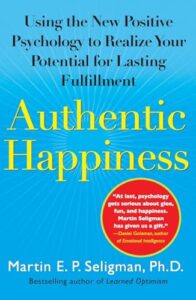
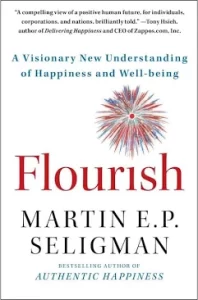
Martin Seligman, the father of positive psychology, has written several groundbreaking books that explore happiness, optimism, and well-being. His three most influential works—Learned Optimism, Authentic Happiness, and Flourish—trace the evolution of his research and offer practical strategies for building a meaningful and fulfilling life.

1. Learned Optimism (1991)

Theme: How Optimism Shapes Success and Well-being
Learned Optimism explores how our thinking patterns affect our resilience, mental health, and success. Seligman argues that pessimism is not fixed—it is learned, and therefore, it can be unlearned. He introduces strategies to shift from a pessimistic to an optimistic mindset, leading to better mental health, performance, and overall life satisfaction.

Key Insights:

  • ✅ Explanatory Style Matters – How we interpret events affects our well-being.
  • ✅ Optimism Can Be Taught – Through cognitive reframing, individuals can change their thought patterns.
  • ✅ Optimism Improves Performance – Optimists are more resilient, have higher work performance, and experience lower rates of depression.

2. Authentic Happiness (2002)

Theme: The Science of Happiness and Well-being
Authentic Happiness expands on Seligman’s optimism research by introducing positive psychology—a new approach that shifts the focus of psychology from fixing problems to enhancing strengths. He presents a research-backed happiness model based on three pillars: The Pleasant Life, The Engaged Life, and The Meaningful Life.

Key Insights:

  • ✅ Happiness is Not Just About Feeling Good – Purpose and engagement matter more than pleasure alone.
  • ✅ Signature Strengths Enhance Well-being – Identifying and using your natural strengths leads to greater happiness.
  • ✅ Positive Psychology Can Improve Work and Relationships – Applying these principles enhances engagement and fulfillment.

3. Flourish (2011)

Theme: Well-being as a Holistic, Multi-Dimensional Concept
In Flourish, Seligman moves beyond happiness and introduces the PERMA model—a more comprehensive framework for well-being: Positive Emotions, Engagement, Relationships, Meaning, and Accomplishment.

Key Insights:

  • ✅ Well-being is More Than Just Happiness – True fulfillment comes from meaning, engagement, and relationships.
  • ✅ PERMA is a Roadmap to Lasting Well-being – Focusing on all five elements leads to a more balanced, fulfilling life.
  • ✅ Positive Psychology in Schools & Workplaces – Real-world applications of positive psychology in education, business, and leadership.

Final Verdict: Which Book Should You Read?

📌 Want to build a more optimistic mindset? → Learned Optimism

📌 Looking for an introduction to happiness science? → Authentic Happiness

📌 Seeking a complete framework for well-being? → Flourish

Together, these books offer a transformative roadmap for resilience, happiness, and long-term fulfillment. Whether you’re an individual seeking personal growth or an HR leader looking to enhance workplace well-being, Seligman’s research provides invaluable insights that reshape how we approach happiness and success.

Filed Under: Book Reviews Tagged With: Authentic Happiness, Flourish, learned optimism, Martin Seligman

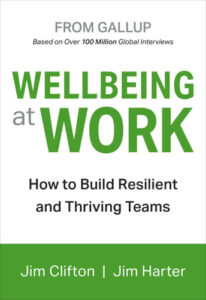
Book Review: “Wellbeing at Work” by Jim Clifton and Jim Harter

March 25, 2025 by Dr. Peggy Marshall

"Wellbeing at Work: How to Build Resilient and Thriving Teams" by Jim Clifton and Jim Harter is a thought-provoking and practical guide that emphasizes the vital role of employee well-being in organizational success. Published by Gallup Press, the book leverages decades of Gallup research to build a compelling case for prioritizing well-being as an essential leadership strategy. The authors make it clear that investing in well-being is not just beneficial for employees but also fundamental for driving performance, engagement, and long-term sustainability.

One of the book’s central themes is the introduction of five core elements of well-being: Career Well-Being, Social Well-Being, Financial Well-Being, Physical Well-Being, and Community Well-Being. According to Clifton and Harter, these elements are crucial for creating resilient and thriving teams. Career Well-Being focuses on finding meaning and purpose in daily work, while Social Well-Being emphasizes building strong and supportive relationships. Financial Well-Being is about managing finances effectively to reduce stress, and Physical Well-Being centers on maintaining good health and energy through positive habits. Lastly, Community Well-Being highlights the importance of feeling connected and contributing to one’s community. The authors argue that when these five elements are prioritized, employees not only perform better but also experience higher satisfaction and engagement.

A key message of the book is the pivotal role that leadership plays in fostering well-being. Clifton and Harter stress that leaders must go beyond traditional management and evolve into coaches who mentor and guide their teams toward building resilience and thriving both personally and professionally. Leaders are encouraged to model healthy behaviors, practice empathy, and actively support their teams in adopting well-being practices. By doing so, they create a workplace culture that values well-being as an integral part of daily operations rather than a mere add-on.

Another powerful aspect of the book is its focus on leveraging individual strengths through the Clifton Strengths assessment. The authors advocate for a strengths-based approach, where employees are encouraged to develop and use their unique strengths consistently. This approach fosters higher morale, motivation, and job satisfaction, while also aligning individual potential with organizational goals. By integrating strengths-based practices into well-being strategies, leaders can help their teams feel more confident and engaged.

The book goes beyond theory by offering practical strategies to implement well-being initiatives effectively. Some of the actionable recommendations include creating flexible work arrangements to alleviate stress, offering financial literacy programs to enhance financial security, fostering open communication and psychological safety, and building a culture of recognition and gratitude. Additionally, the authors highlight the importance of wellness programs that address both physical and mental health needs. These practical applications make the book a valuable resource not only for leaders but also for coaches and HR professionals seeking to build and sustain a well-being-centered culture.

Clifton and Harter’s message is clear: well-being is not a luxury or a trendy initiative but a fundamental component of sustainable leadership. By placing well-being at the heart of organizational strategy, leaders can build resilient, engaged, and high-performing teams. The book challenges outdated leadership models by emphasizing a human-centric approach that prioritizes people over processes.

"Wellbeing at Work" is more than just a guide; it is a call to action for leaders to rethink how they support their employees. Through data-driven insights, real-world examples, and practical advice, the authors make a strong case for making well-being a core organizational priority. Whether you’re a leader, a coach, or an HR professional, this book will inspire you to adopt new strategies that foster a thriving workplace. It’s a highly recommended read for anyone committed to sustainable leadership and team success.


Filed Under: Book Reviews Tagged With: sustainable change, team building, wellbeing, wellbeing at work, workplace environment

Building Habits for Wellbeing

March 25, 2025 by Dr. Peggy Marshall

One of the most common requests from clients and leaders is for strategies and resources to help change habits. Building habits is not just about making grand resolutions or sweeping changes; it’s about taking small, intentional steps that fit naturally into our daily routines. Yet, one of the biggest challenges is making those practices stick, especially when life gets busy and priorities compete for our attention.

That’s why building habits around well-being strategies is so important. It’s not about transforming your routine overnight but making consistent, manageable adjustments that accumulate into lasting improvements. Whether it’s taking a few mindful breaks throughout the day, fostering stronger social connections at work, or practicing gratitude regularly, these small habits can have a big impact on how we feel and perform.

In this blog, we’re diving into practical ways to build well-being habits that last. Let’s explore some habits you can develop to enhance well-being at work and make it an integral part of your everyday routine.

Habits for Wellbeing

  1. Habit Building Around Work-Life Balance
  • Start Small: Begin by setting a clear boundary for work hours. For example, commit to logging off at a specific time each day.
  • Attach to an Existing Routine: After finishing your workday, immediately change into comfortable clothes or go for a brief walk to signal the transition.
  • Track Progress: Use a habit tracker to log when you successfully end work on time.
  • Reinforce with a Reward: Treat yourself to something relaxing after adhering to your boundary—like watching a favorite show or cooking a nice meal.
  • Make It Enjoyable: Choose a wind-down activity you genuinely look forward to, like reading or spending time with family.
  1. Habit Building Around Creating a Supportive Environment
  • Daily Check-In Habit: Start your day by checking in with yourself and assessing your emotional state. This could be a quick journaling session or a few minutes of reflection.
  • Weekly Team Check-In: Schedule a regular 15-minute catch-up with team members to discuss how they’re feeling and what support they need.
  • Make It Routine: Link these check-ins to a specific time—like Monday mornings or Friday afternoons—so they become habitual.
  • Encourage Peer Support: Make it a habit to give positive feedback to at least one colleague per day.
  1. Habit Building Around Open Communication
  • Habit of Listening: Practice active listening by dedicating the first few minutes of every meeting to hear others’ perspectives without interrupting.
  • Daily Reflection: Spend a few minutes at the end of each day reflecting on how well you communicated and what you could improve.
  • Encourage Feedback: Make it a habit to ask for feedback at least once a week, whether it’s about your leadership style or a recent project.
  • Reinforce the Habit: Reward yourself for good communication by acknowledging your efforts and celebrating improved relationships.
  1. Habit Building Around Recognition and Reward
  • Daily Praise Habit: Set a goal to acknowledge at least one positive contribution from a team member each day.
  • End-of-Week Reflection: Review your recognition efforts and make note of how they impacted morale.
  • Gratitude Journaling: Maintain a habit of writing down three positive things you observed in your team each week.
  • Public Acknowledgment: Make it routine to publicly recognize achievements in meetings or via company communication channels.
  1. Habit Building Around Personal and Professional Growth
  • Learning Block: Dedicate 20 minutes a day to personal or professional development activities, like reading industry articles or practicing a new skill.
  • Mentorship Habit: Schedule biweekly meetings with a mentor or mentee to exchange knowledge and experiences.
  • Document Growth: Keep a journal to track what you learned and how you applied it.
  • Reflect and Adjust: Once a month, reflect on your progress and set new learning goals.
  1. Habit Building Around Physical Health
  • Movement Habit: Set a reminder to stand up and stretch every hour during the workday.
  • Morning Routine: Incorporate a 5-minute stretch or yoga practice into your morning routine.
  • Walking Meetings: Replace sedentary meetings with walking ones whenever possible.
  • Hydration Habit: Keep a water bottle at your desk and aim to refill it three times a day.
  • Track Progress: Use a fitness app to log daily steps or workout sessions.
  1. Habit Building Around Mindfulness and Mental Health
  • Mindful Morning Routine: Start each day with a 5-minute meditation or breathing exercise to set a calm, focused mindset.
  • Midday Pause: Take a short mindfulness break during lunch to check in with your thoughts and emotions.
  • Gratitude Habit: Write down one thing you’re grateful for at the end of each workday.
  • Relaxation Ritual: Develop a habit of winding down before bed with a calming activity, like light stretching or journaling.
  1. Habit Building Around Financial Well-Being
  • Weekly Budget Review: Set aside 10 minutes every Friday to check your spending and adjust your budget.
  • Automate Savings: Set up automatic transfers to your savings account after every paycheck.
  • Daily Expense Tracking: Record your daily expenses to stay aware of spending habits.
  • Reward for Meeting Goals: Treat yourself (responsibly) when you hit your monthly savings goal.
  1. Habit Building Around Social Connections
  • Check-In Habit: Make it a routine to reach out to a colleague or friend once a week just to see how they’re doing.
  • Coffee Chat Routine: Schedule regular virtual or in-person coffee breaks with team members to maintain connections.
  • Team Gratitude Circle: Incorporate a brief gratitude-sharing session during team meetings.
  • Mentoring Habit: Commit to checking in with mentees on a regular schedule to maintain supportive relationships.
  1. Habit Building Around Leadership and Well-Being
  • Model Self-Care: Practice self-care openly and encourage your team to do the same.
  • Lead with Positivity: Make it a habit to start meetings with a positive note or success story.
  • Promote Balance: Regularly communicate the importance of taking breaks and disconnecting from work after hours.
  • Reflect on Your Leadership: Set aside time each week to evaluate how your actions and decisions are influencing team well-being.

Final Thoughts

Building habits around well-being strategies requires consistency, intention, and a growth mindset. It’s not about making sweeping changes overnight, but rather about committing to small, manageable actions that build momentum over time. Start with one simple habit, practice it consistently, and be patient with yourself as you adjust and grow. Celebrate progress, even if it’s incremental, and remember that every positive step contributes to a healthier, more resilient you.

Developing habits that enhance well-being benefits not only your personal health and happiness but also the overall culture of your workplace. When individuals prioritize self-care and wellness, it creates a ripple effect that fosters a supportive, positive environment. Leaders who model and encourage these habits set the tone for a culture where well-being is not just an individual effort but a collective priority.

By embedding well-being habits into daily routines, organizations can cultivate a thriving culture that values both individual and team wellness. It’s about creating a workplace where well-being is not just an afterthought but an integral part of how we work and support one another. Let’s commit to building these habits, nurturing them consistently, and empowering ourselves and others to prioritize well-being as a way of life.

Next week, on Wednesday, April 2, at 11 am EST, Global IOC and The Global Coaching Network will be hosting an exciting Webinar that dives deep into well-being from multiple perspectives. This event will explore well-being through different lenses and offer practical strategies for strengthening and expanding well-being practices in both personal and professional contexts.

Whether you're looking to enhance your own well-being or support the well-being of those you lead, this Webinar will provide valuable insights and actionable takeaways. Join us to learn from industry experts and thought leaders who are passionate about creating resilient and thriving workplaces.

Mark your calendar and don’t miss this opportunity to gain fresh perspectives and new strategies to enhance well-being at work!

Zoom link: https://us02web.zoom.us/j/89306258336?pwd=DKiN81Y6PdmueKawvEa6NQlCaoHi14.1


Filed Under: Communities of Practice Tagged With: Well-being, well-being at work

  • « Go to Previous Page
  • Page 1
  • Interim pages omitted …
  • Page 8
  • Page 9
  • Page 10
  • Page 11
  • Page 12
  • Page 13
  • Go to Next Page »
  • | Home |
  • Leader Development Pathways
  • | Executive Coaching |
  • Team Coaching
  • | Sustaining Impact |
  • Detach from Drama
  • | Coach Cultures at Global IOC |
  • My Account |

Copyright Global IOC© 2026